


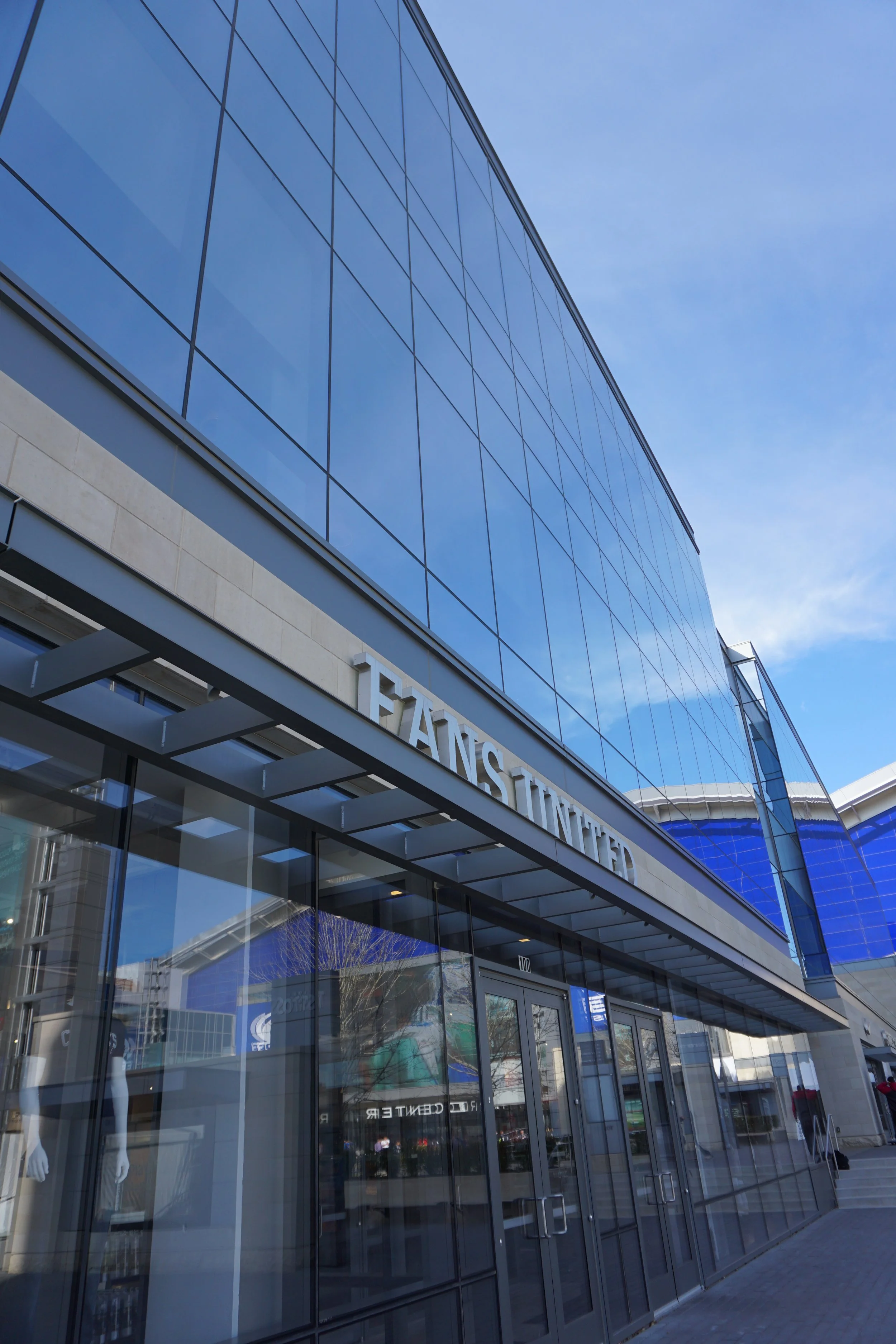




Founded in 1970, Viracon is a leading single-source architectural glass fabricator. We partner with best-in-class architecture firms and glazing contractors to provide great buildings with great glass - glass that inspires and turns buildings into icons.
Viracon manufactures and fabricates production at headquarters in Owatonna, Minnesota
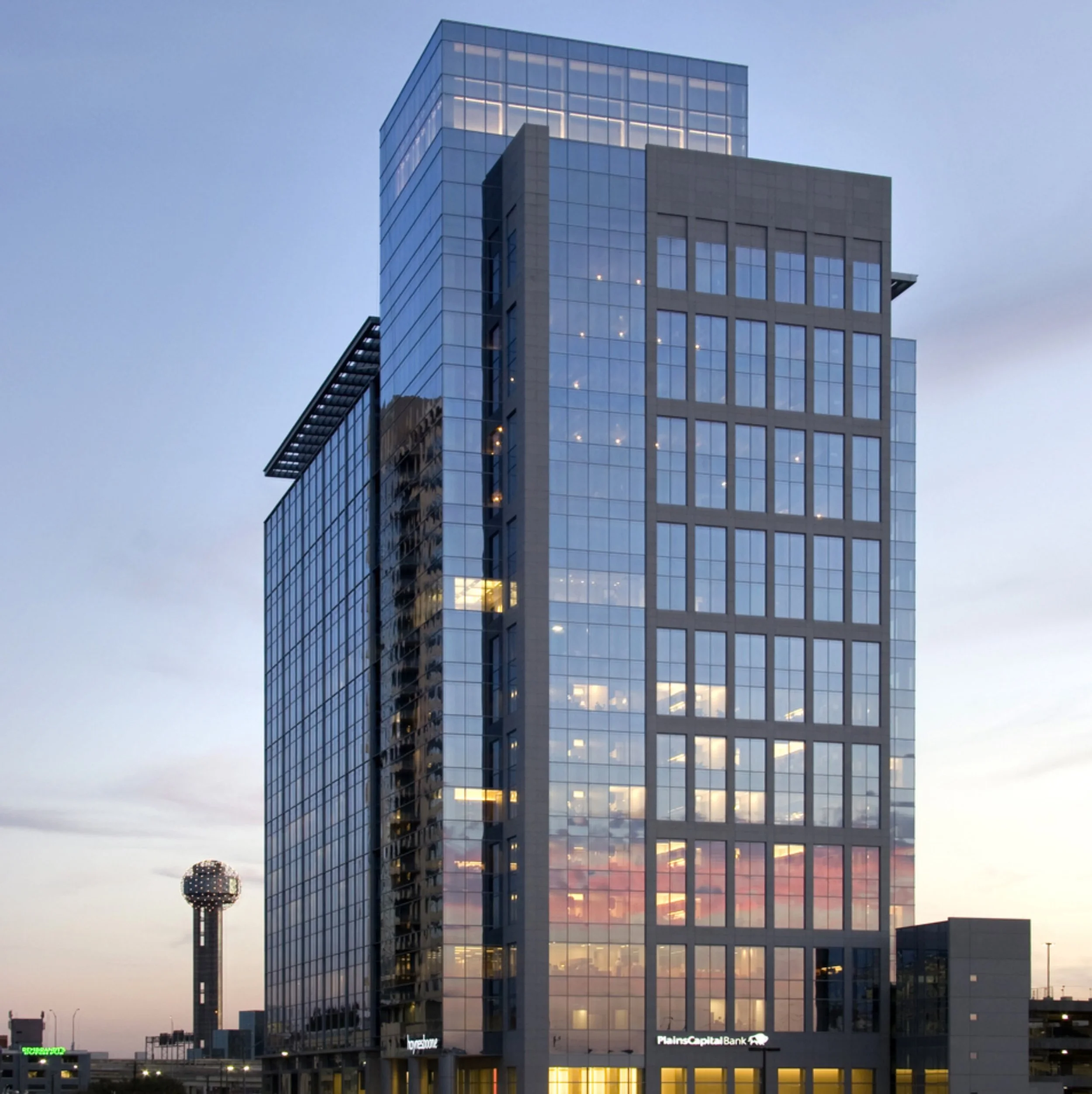
INSULATED GLASS
(IGU)
Insulating glass consists of two or more plies of glass enclosed by a spacer.
The most common insulating glass unit is constructed with two plies of glass and one sealed air space.

HIGH-PERFORMANCE COATINGS
Coatings are thin layers of metal applied to glass to improve solar performance.
Coatings with low-e properties have low heat transfer properties and higher VLTs than reflective coatings.
HEAT
TREATMENT
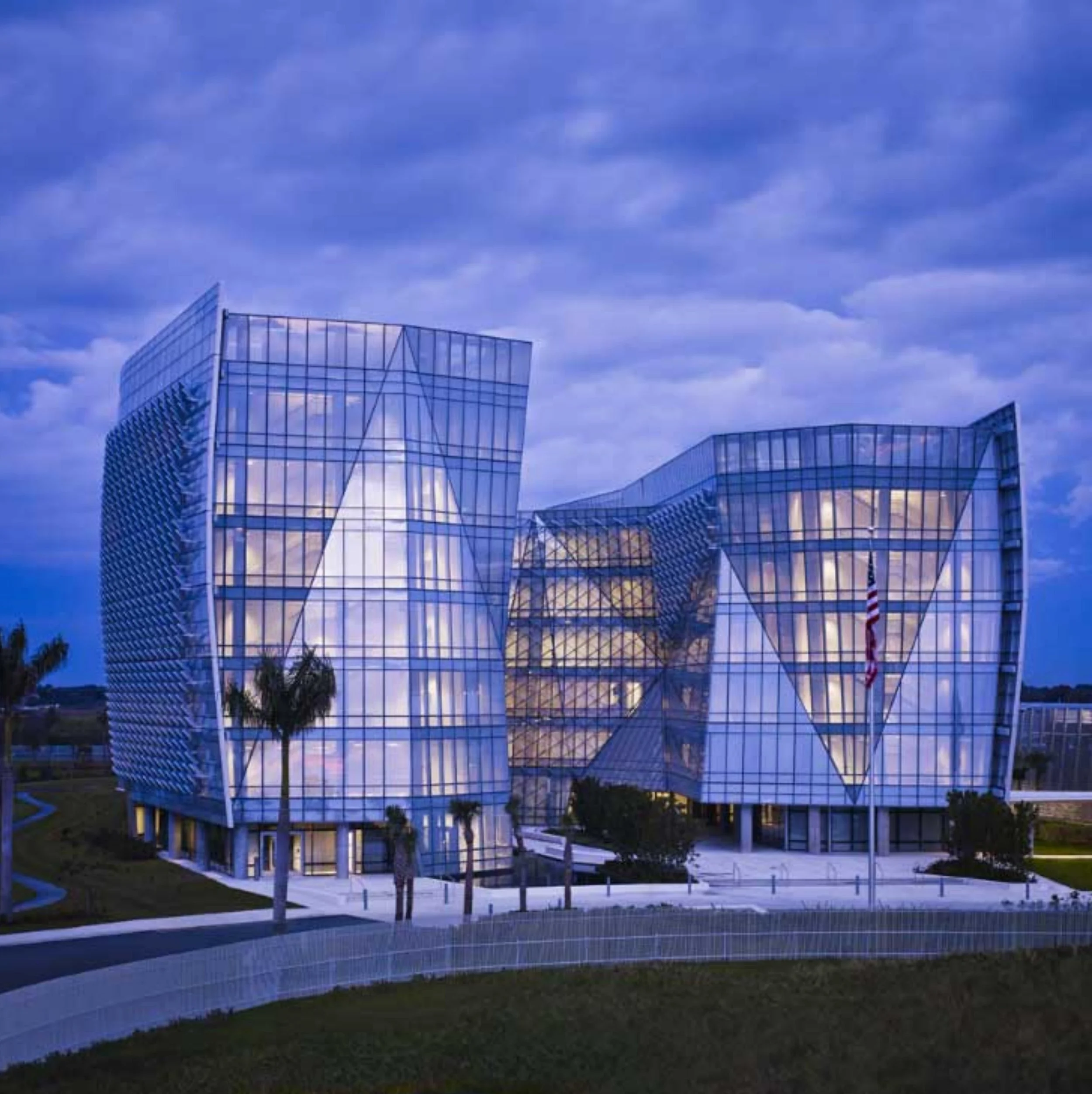
Heat-treated glass is a term used to describe glass that has been processed through a tempering furnace to alter its strength characteristics, provide greater resistance to thermal and mechanical stresses and achieve specific break patterns for safety glazing applications as compared to annealed glass.

ACOUSTICAL
GLASS
Laminated glass reduces noise transmission due to the sound damping characteristics of the interlayer. The STC (Sound Transmission Class) rating is a single-number rating system for interior building partitions and viewing windows used to categorize acoustic performance.
SPECIALITY PRODUCTS
Cybershield
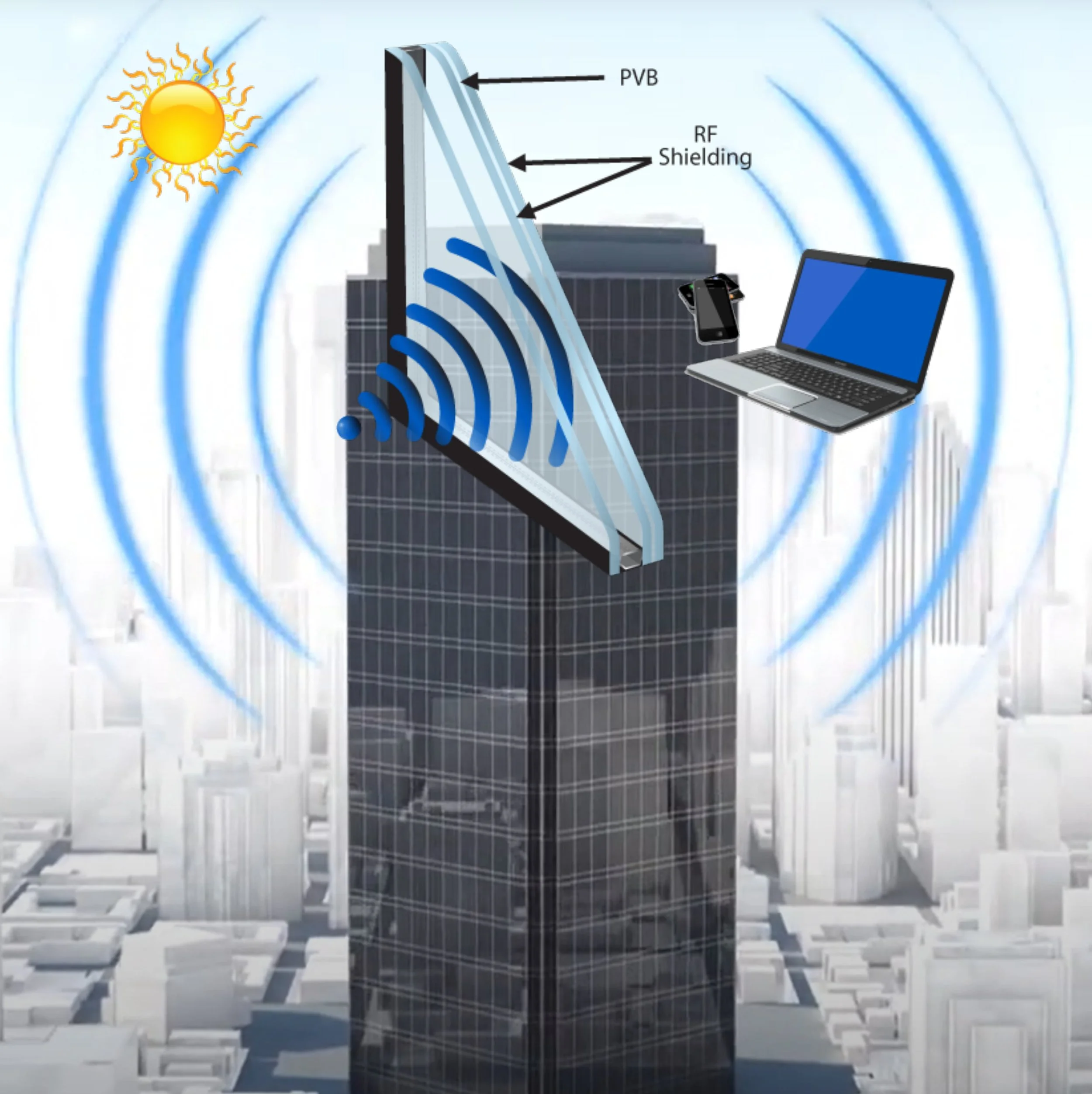
CyberShield by Viracon combines two plies of coated glass substrate specifically engineered to reduce the transmission of certain electromagnetic frequencies in a laminated configuration with a PVB interlayer.

Bird-Friendly Glass
As a glass fabricator, Viracon has been actively involved in the ongoing bird friendly glass research, focusing specifically on finding practical solutions using conventional glass products for buildings with applied patterns. Click the button below to learn more about Bird-Friendly Glass by Viracon
Glass Inspection Criteria & Standards
What makes Viracon Glass different? Click the button below to view Viracon’s Quality Inspection Criteria & Standards.
videos
Design & Education (FAQ’S)
-
There are two kinds of heat-treated glass, heat-strengthened (HS) and fully tempered (FT). Fabrication requirements, tolerances, and testing procedures for heat-treated glass are defined in ASTM C1048 Standard Specification for Heat-Strengthened and Fully Tempered Flat Glass.
-
Heat Treated: Term used for both fully tempered glass and heat-strengthened glass.
-
Heat Strengthened (HS) : Glass that has been heat-treated to have a surface compression between 3500 and 7500 psi and meet the requirements for ASTM C 1048 kind HS. It is ~2-3 times the strength of annealed glass. Heat-strengthened glass is not a safety glazing material and will not meet the requirements of ANSI Z97.1 or CPSC 16 CFR 1201.
-
Heat Soak: A process of heating glass to a specific temperature for a specified time in a special oven in an attempt to find nickel sulfide inclusions in the glass.goes here
-
Heat Soaking
Fully tempered glass may break without warning due to the expansion of nickel sulfide inclusions (NiS) present within float glass. To avoid the risk of spontaneous breakage in fully tempered glass, a common practice is to avoid the use of tempered glass whenever possible.
Although the incidence of tempered glass breakage due to these inclusions is rare, greater publicity of their occurrence has resulted in an increased awareness of this phenomenon. In fact, limiting the use of tempered glass in commercial building applications has become the recommendation of a number of glass suppliers, including Viracon.
In some situations however, tempered glass is required to meet safety glazing requirements or for added strength. In these cases, Viracon can perform a heat soak test to provide the added assurance that significant spontaneous breakage will not occur. For more information, refer to our technical document Heat Soak Testing.
-
Heat Strengthened (HS)
Heat-strengthened glass is twice as strong as annealed glass of the same thickness, size and type. If broken, heat-strengthened glass will break into large shards similar to annealed glass. Because of this, the tendency for the glass to vacate the opening is reduced.
The surface compression of heat-strengthened glass with thicknesses of 1/4″ (6mm) and less is 4,000 – 7,000 psi. Surface compression for 5/16″ (8mm) and 3/8″ (10mm) heat-strengthened glass is 5,000 – 8,000 psi. (Because of reader repeatability and instrument tolerances, Viracon’s tolerance for heat-strengthened glass surface compression is +/- 1,000 psi.)
While improving the strength and resistance to thermal shock and stress, heat-strengthened glass does not meet safety glazing requirements as outlined by the American National Standards Institute (ANSI) Z97.1 or the federal safety standard Consumer Products Safety Commission (CPSC) 16 CFR 1201, and therefore should not be used in these situations. In a specification, the designation for heat strengthened glass is HS.
-
Due to the process of heat-treating glass, the original flatness of the annealed substrate is slightly modified. This inherent condition of heat-treated glass results in roller wave distortion and glass bow and warp. There is no industry standard for heat-treated glass roller wave.
-
Viracon’s tolerance for roller wave is a maximum of 0.003″ (0.076mm) from peak to valley in the center of lites, and a maximum of 0.008″ (0.20mm) within 11.3″ (287mm) of the leading or trailing edge. For clear or low-iron glass 1/4” to 3/8” thick without ceramic frit or ink, the maximum will be + or – 100 mD (millidiopter) over 95% of the glass surface.
-
Viracon’s tolerance for localized warp for rectangular glass is 1/32″ (0.8mm) over any 12″ (305mm). This is half of the ASTM C1048 requirement of 1/16″ (1.6mm) over any 12″ (305mm) span. Viracon’s tolerance for overall warp meets the ASTM C1048 table.
-
Solar Heat Gain Coefficient (SHGC)
The portion of directly transmitted and absorbed solar energy that enters into the building's interior. The higher the SHGC the higher the heat gain.
-
U-Value
Is the measurment of heat gain or heat loss through glass due to the thermal conductance and the difference in indoor and outdoor temperatures. As the u-value decreases, so does the amount of heat that is transferred through the glazing material. The lower the u-value the more restrictive the fenestration product is to heat transfer; reciprocal of r-value.scription
-
Shading Coefficient
Shading coefficient is the ratio of solar heat gain through a specific type of glass that is relative to the solar heat gain through a 1/8" (3mm) ply of clear glass under identical conditions. As the shading coefficient number decreases heat gain is reduced which means a better performing product.
QUICK LINKS