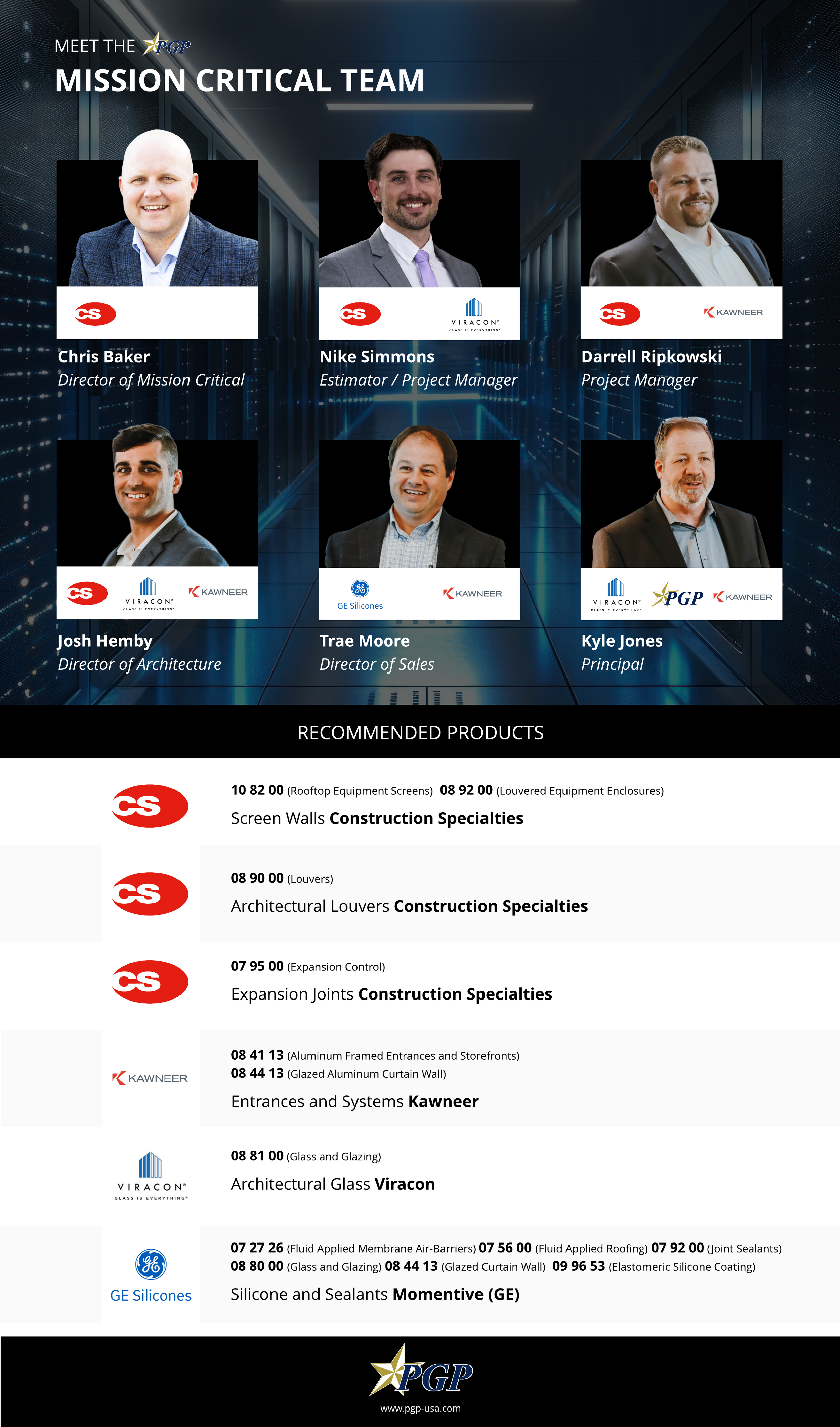
Advanced manufacturing / mission critical team
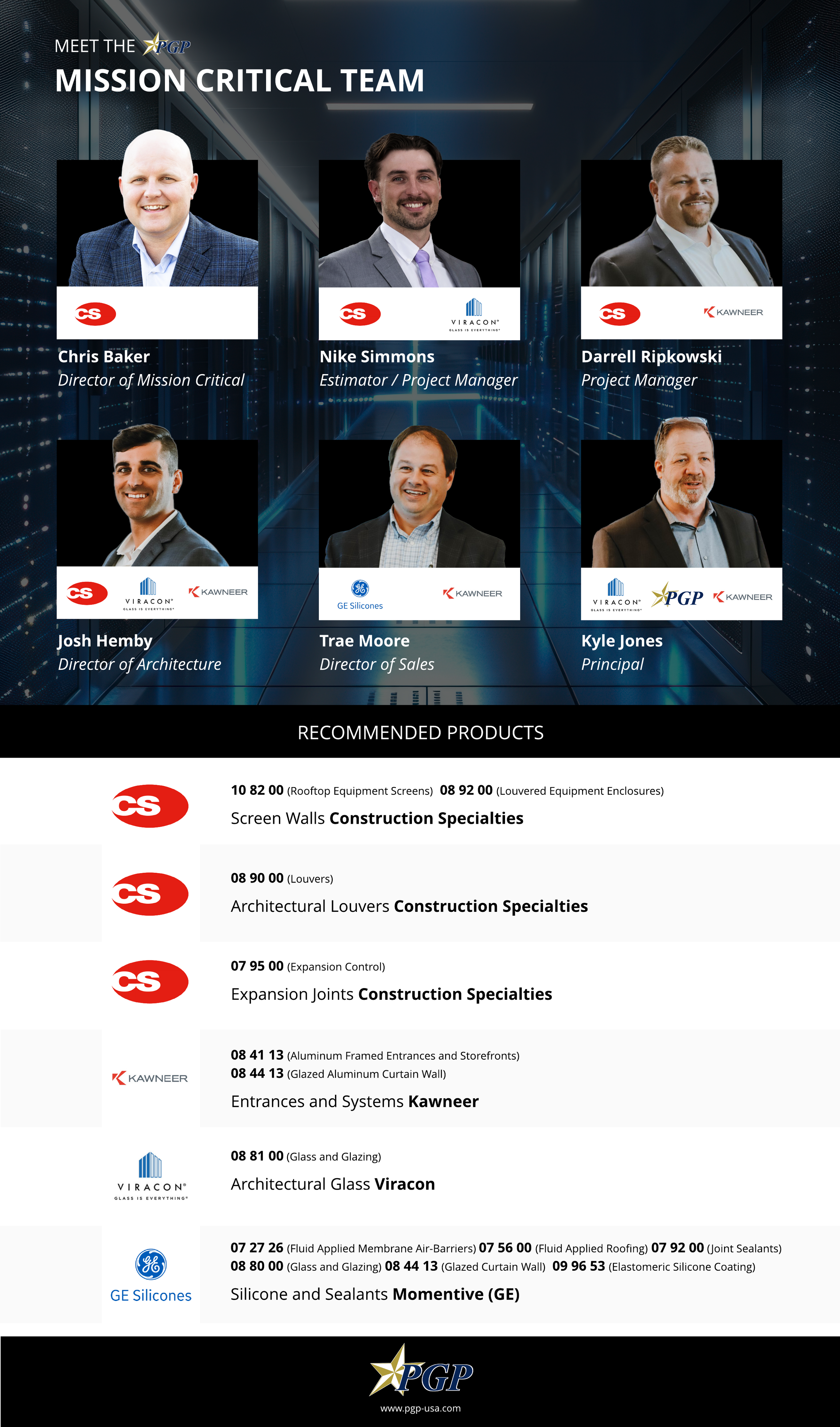
Advanced Manufacturing & Mission Critical Design Support
Specialized architectural product coordination for advanced manufacturing facilities, data centers, and complex industrial projects in Texas
The next generation of American infrastructure is being built across Texas. Semiconductor fabrication plants, aerospace and defense facilities, energy and petrochemical operations, high-technology manufacturing campuses, data centers, and other mission-critical developments require architectural systems that perform under demanding operational, environmental, security, and scheduling conditions.
PGP’s Advanced Manufacturing and Mission Critical Design Support Team provides specialized design assistance, product consultation, development coordination, and installation support for architects, building-envelope consultants, general contractors, trade contractors, owners, and developers working on these complex facilities.
Our team supports architectural product selection and coordination across Divisions 05, 07, 08, 09, and 10—from exterior building-envelope systems and controlled entrances to interior protection, equipment screening, expansion joints, and specialty architectural components.
Product Consultation Across Divisions 05, 07, 08, 09, and 10
Division 05: Architectural Metal Railings
Interior handrails and guardrail systems support safe movement through stairs, elevated walkways, administrative areas, employee spaces, and other occupied areas within advanced manufacturing and mission-critical facilities.
PGP can assist with Livers Bronze Interior Handrail system configuration, material and finish selection, infill options, attachment conditions, code considerations, shop-drawing coordination, and integration with surrounding architectural finishes.
Division 07: Building-Envelope Protection and Expansion Control
Division 07 systems help manage air, water, weather exposure, building movement, and transitions between materials.
For advanced manufacturing plants and data centers, GE Silicone fluid-applied air barriers, roofing applications, joint sealants, silicone coatings, Construction Specialties expansion-joint systems, and perimeter transitions around windows, curtain wall, panels, louvers, and penetrations.
Early coordination is particularly important where multiple trades share responsibility for adjacent components. Clearly defined transitions can help establish continuity across the building enclosure and reduce uncertainty during installation.
Division 08: Glass, Glazing, Entrances, and Openings
Division 08 systems influence envelope performance, controlled access, durability, daylight, and the appearance of employee-facing and administrative areas.
Product categories may include:
Architectural glass (Viracon)
Aluminum curtain wall (Kawneer)
Storefront framing (Kawneer)
Doors and entrances (Kawneer)
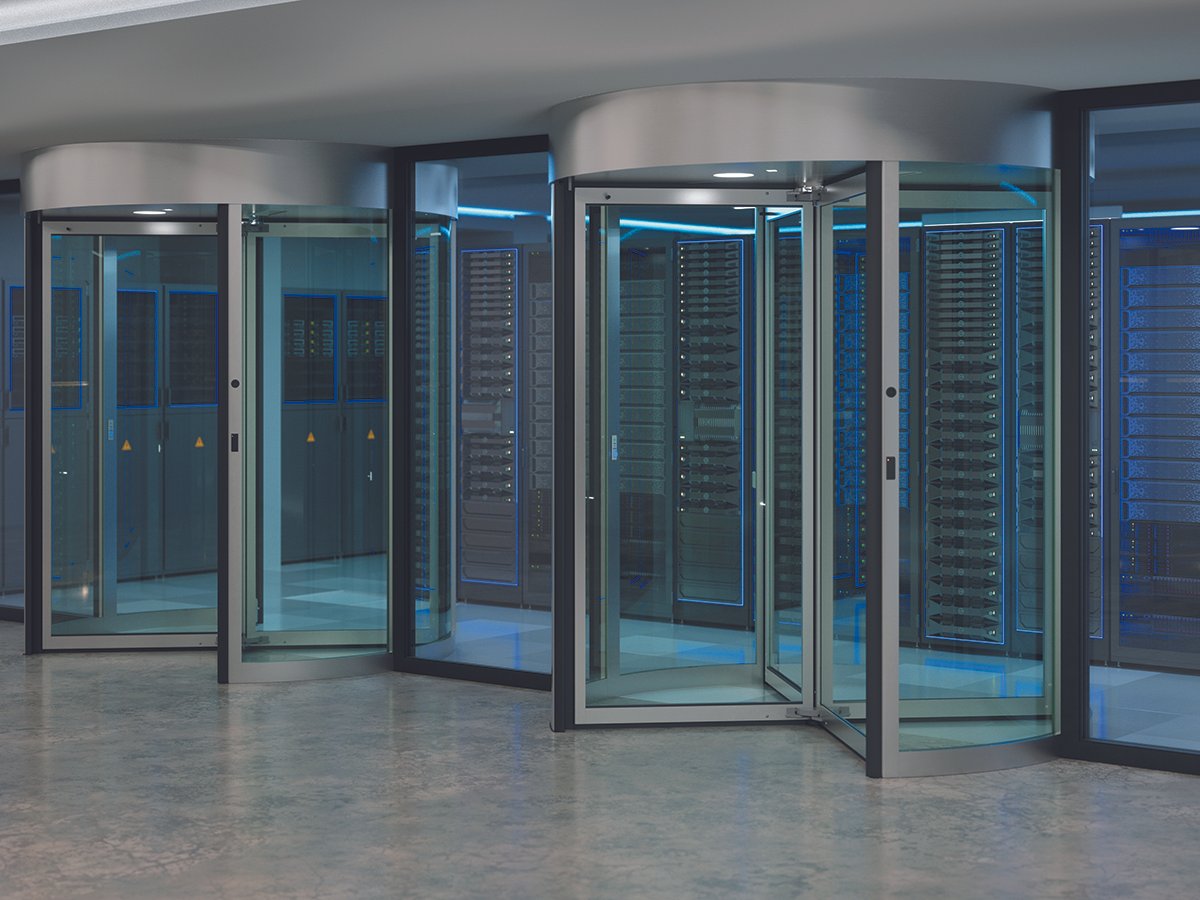
Secure revolving doors (Crane x dormakaba)
Impact- and blast-related solutions where required (Viracon / Kawneer)
Louvers / Equipment Screens (Construction Specialties)
PGP helps teams evaluate glass, framing, entrances, anchorage, sealants, perimeter transitions, access requirements, security criteria, weather exposure, and integration with adjacent wall construction.
Division 09: Coatings, Finishes, and Interior Protection
Interior environments within advanced manufacturing and mission-critical facilities must often balance durability, cleanability, maintenance, safety, and a coordinated architectural appearance.
Depending on the project, Division 09 consultation may include GE Silicone coatings, elastomeric silicone coatings, wall-protection products, and finish systems for high-use employee, administrative, operational, and circulation areas.
PGP can assist with GE Silicone application review, substrate considerations, product compatibility, finish selection, samples, and manufacturer recommendations.
Division 10: Equipment Screening and Architectural Specialties
Mechanical, electrical, cooling, power-generation, and utility infrastructure can occupy a significant portion of an advanced manufacturing or data center campus.
Construction Specialties Architectural screen walls and louvered equipment enclosures can help conceal rooftop and grade-level equipment while supporting ventilation and maintaining a coordinated exterior appearance.
PGP helps teams coordinate Construction Specialties appearance, free-area requirements, structural support, equipment access, wind loads, sightlines, panel dimensions, attachments, and installation sequencing.
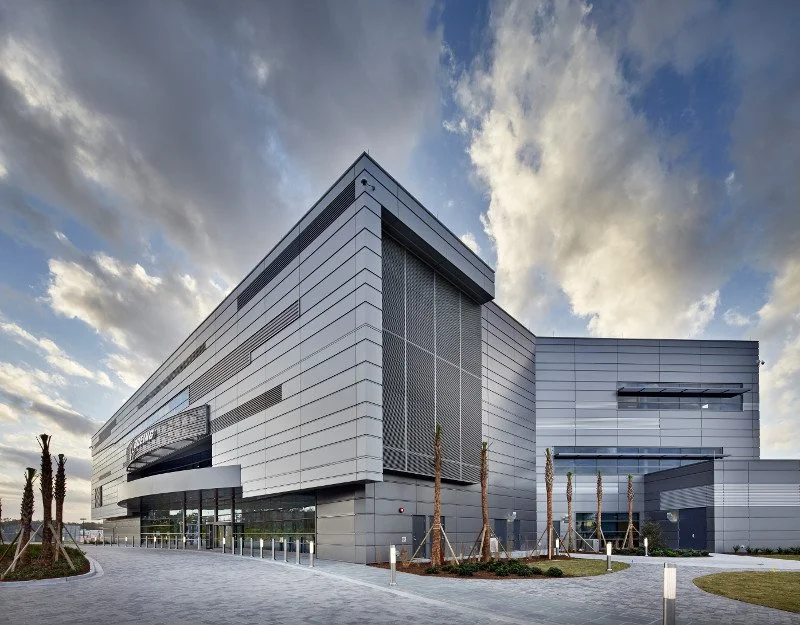
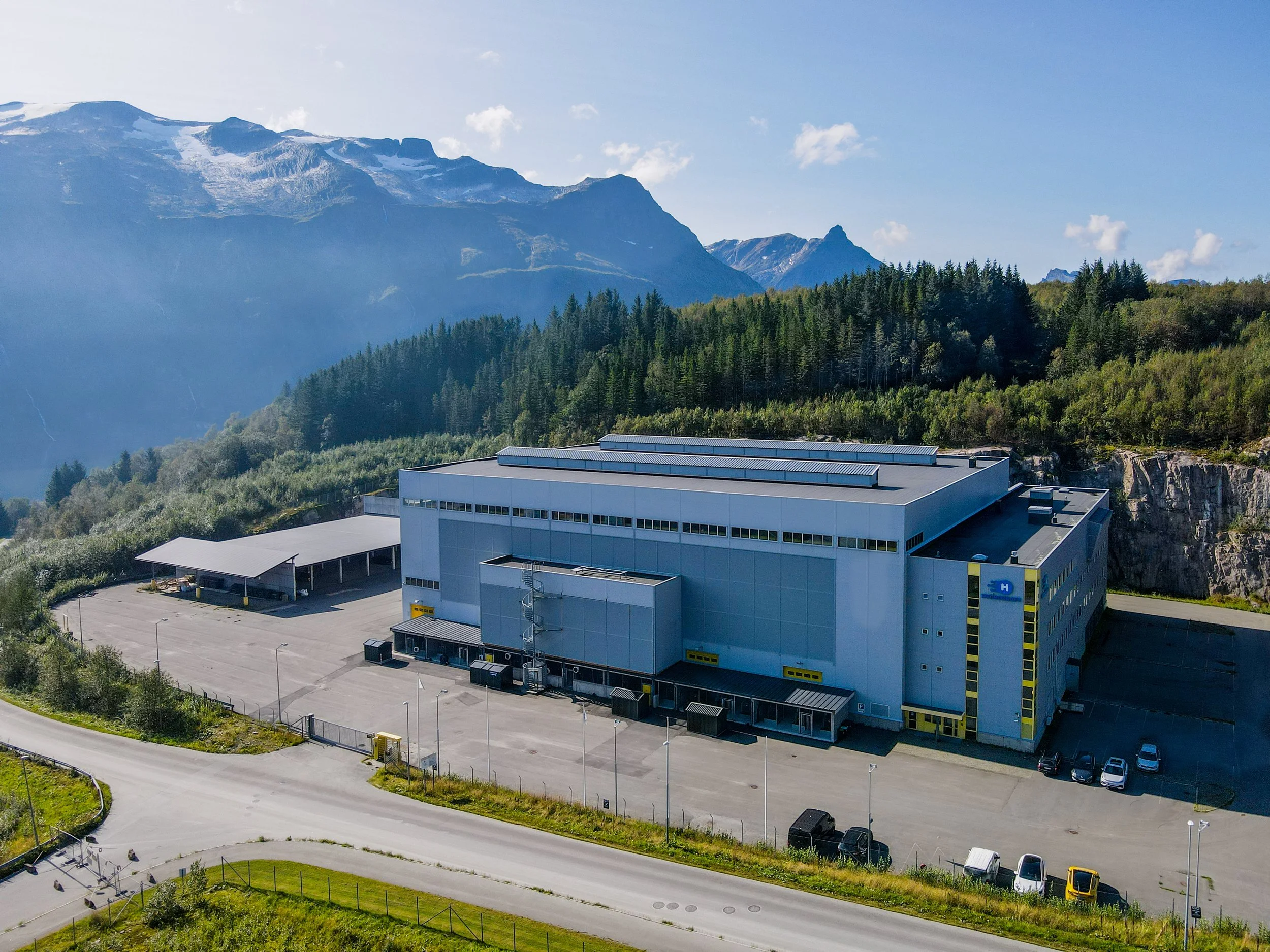
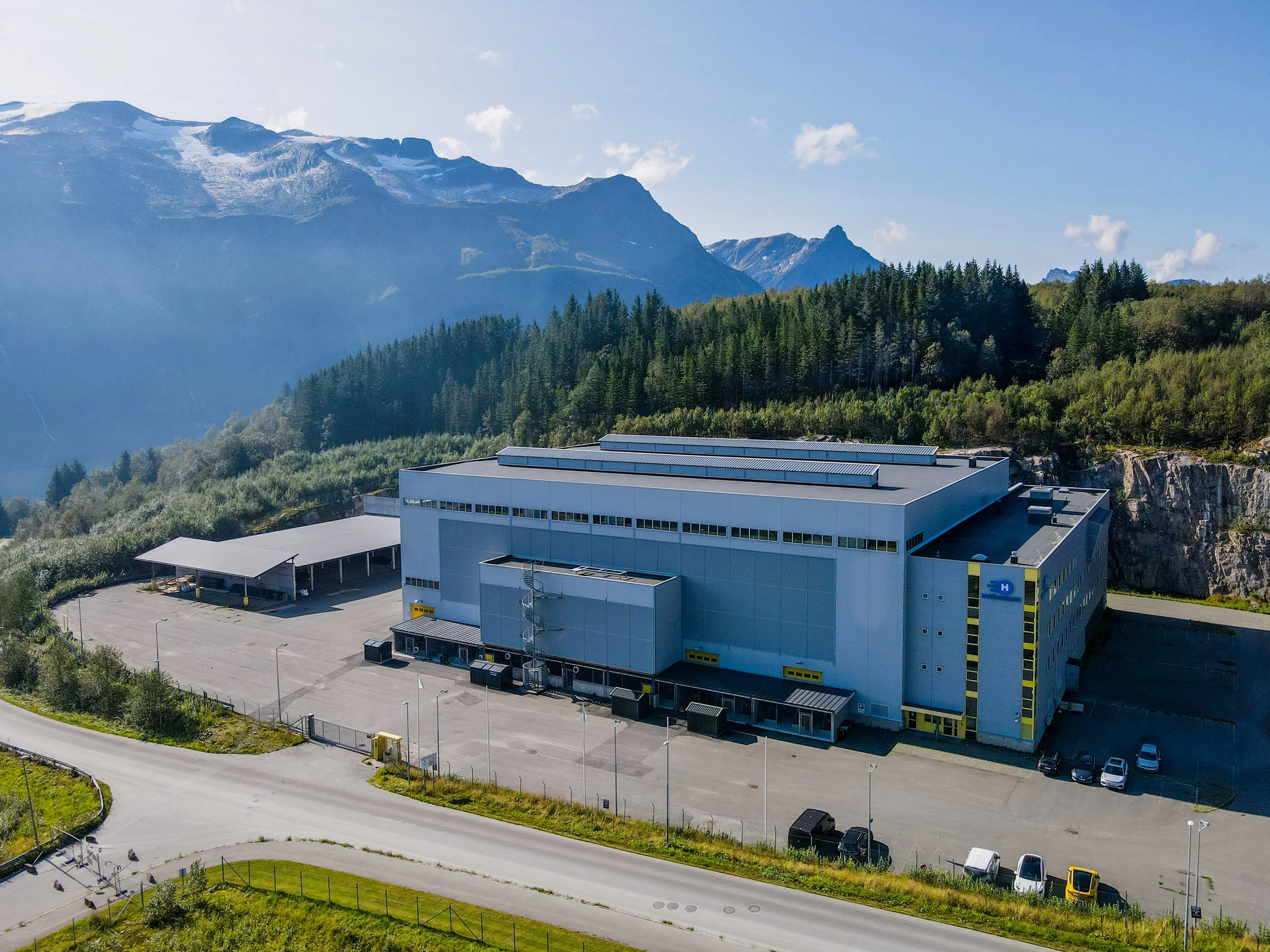
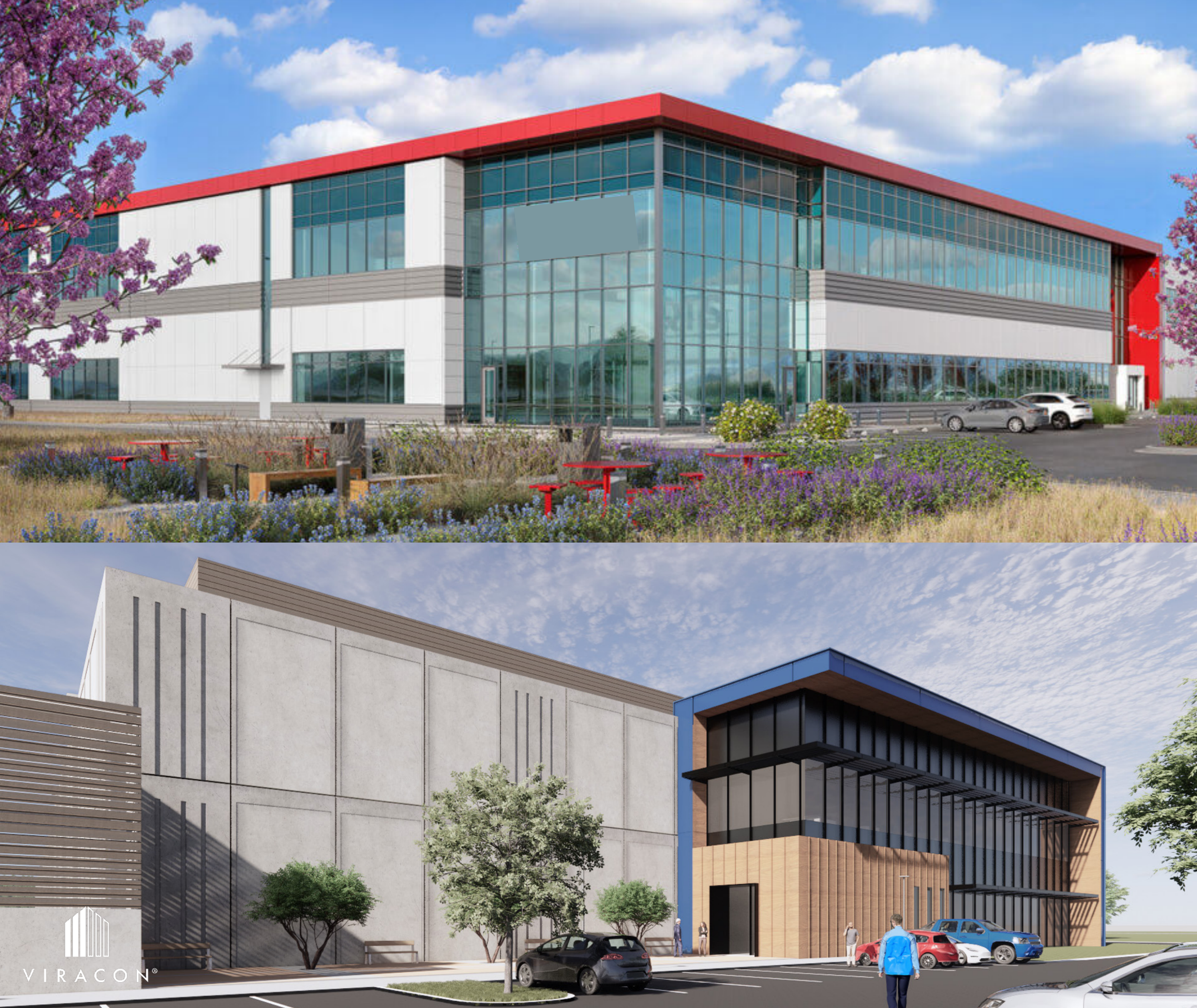
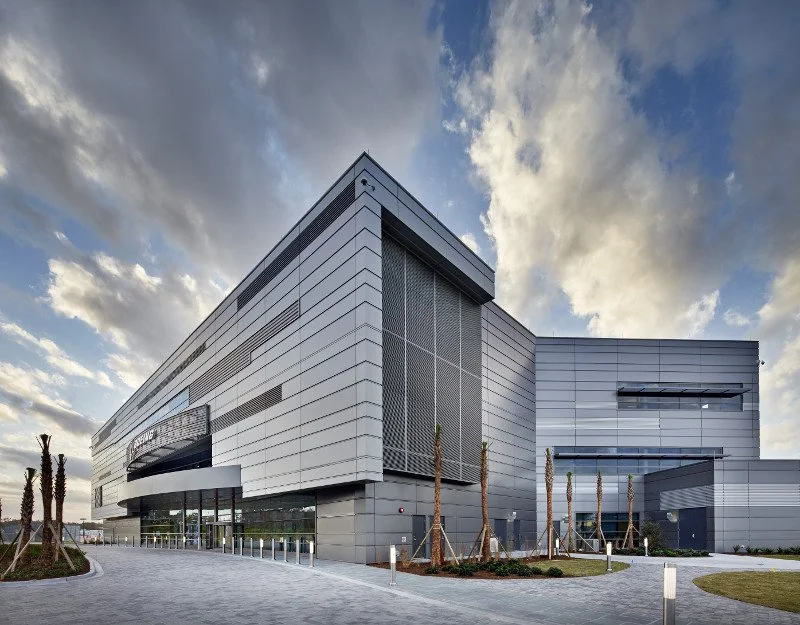
To protect the privacy and security of our clients, we don't show images of data centers / mission critical facilities that we've helped construct.
Photos found on this page are examples of the types of products found throughout advanced manufacturing and mission critical facilities. Visit our Project Gallery to view all our projects.
Planning a Mission-Critical Facility? Designing an Advanced Manufacturing Plant?
Contact PGP’s dedicated technical Mission-Control Team for
Division 05, 07, 08, 09, and 10 product solutions
PRODUCTS
Advanced Manufacturing / Mission-Critical
Recommended Products for Advanced Manufacturing and Mission Critical Projects
10 82 00 — Rooftop Equipment Screens
08 92 00 — Louvered Equipment Enclosures
Screen walls and equipment screening systems
08 90 00 — Louvers
Architectural louvers for ventilation and exterior integration
07 95 00 — Expansion Control
Expansion-joint systems for floors, walls, ceilings, roofs, and exterior conditions
Explore Construction Specialties products
08 41 13 — Aluminum-Framed Entrances and Storefronts
08 44 13 — Glazed Aluminum Curtain Wall
Aluminum entrances, storefront, curtain wall, and related framing systems
08 81 00 — Glass and Glazing
High-performance architectural glass for exterior façades, entrances, offices, and occupied support areas
08 42 33 — Revolving Door Entrances
Secure revolving doors and controlled entrance solutions
Explore Crane Revolving Door products
07 27 26 — Fluid-Applied Membrane Air Barriers
07 56 00 — Fluid-Applied Roofing
07 92 00 — Joint Sealants
08 44 13 — Glazed Curtain Wall
08 80 00 — Glazing
09 96 53 — Elastomeric Silicone Coatings
Air- and water-resistive barriers, structural silicone, weathersealants, roofing solutions, and elastomeric coatings
05 73 00 — Decorative Metal Railings
Interior handrail and guardrail systems for occupied and employee-facing spaces
Explore Livers Bronze products
07 42 13 — Metal Wall Panels
Aluminum composite panels, plate panels, backpans, shadow boxes, column covers, and custom architectural metal components
Advanced Manufacturing
Design & Education
What Is Advanced Manufacturing?
Advanced manufacturing combines sophisticated production processes with automation, digital technology, specialized equipment, precision engineering, and highly controlled operating environments. These facilities may support semiconductor production, aerospace and defense manufacturing, energy technology, battery production, electronics, biotechnology, and other highly technical industries.
Unlike conventional manufacturing buildings, advanced manufacturing facilities frequently include several interconnected building types. A development may combine production areas, clean or controlled environments, laboratories, central utility plants, warehouses, administrative offices, employee facilities, and secure service areas within one campus.
The scale of this market is substantial. Hines research on America’s manufacturing buildout estimates that approximately $1 trillion in advanced manufacturing construction could reshape industrial development through the remainder of the decade. Hines identifies Dallas–Fort Worth and Houston among six high-scoring U.S. markets positioned to benefit from this growth.
Dallas–Fort Worth benefits from its established logistics, industrial, aerospace, and defense ecosystem. Houston brings one of the country’s deepest energy, petrochemical, engineering, and industrial talent bases. Austin and Central Texas have also become important centers for semiconductor, technology, and advanced manufacturing investment.
These large projects can create their own network of suppliers, contractors, infrastructure, skilled labor, and supporting development. As these industrial ecosystems grow, architects and construction teams need product partners who understand the pace, complexity, and performance requirements of advanced manufacturing work.
Advanced Manufacturing and Mission Critical Facilities
Advanced manufacturing and mission-critical projects are distinct markets, but they share many architectural and construction challenges.
Advanced manufacturing facilities are built around highly technical production processes. Mission-critical facilities are designed to maintain essential operations with minimal interruption. Data centers are a major example, but the mission-critical category may also include secure operations centers, communications facilities, utility infrastructure, emergency-response facilities, and other buildings that support continuous or sensitive functions.
Both project types may require:
Accelerated design and construction schedules
Large, phased, or repeatable building programs
Secure and controlled access
High-performance exterior envelopes
Durable materials for intensive operating conditions
Weather-resistant openings and transitions
Coordination around mechanical and electrical infrastructure
Screening of rooftop, utility, and service equipment
Specialized glazing and entrance systems
Clearly defined installation sequences
Product consistency across multiple buildings or project phases
Long-term serviceability and maintenance planning
PGP helps project teams evaluate these requirements as part of a coordinated architectural product strategy.
Supporting Complex Projects from Early Design Through Construction
Advanced manufacturing and mission-critical facilities require more than product availability. Successful delivery depends on aligning architectural intent, technical requirements, manufacturer capabilities, procurement schedules, trade coordination, and field installation.
PGP’s team works with architects, consultants, general contractors, glazing contractors, specialty contractors, owners, and developers from early planning through construction.
Our services may include:
Preliminary product and application review
Manufacturer and system comparisons
Design-development consultation
Product samples and finish coordination
Architectural detail review
Specification assistance
Performance and testing-document coordination
Budget and availability discussions
Submittal and shop-drawing coordination
Installation-sequence planning
Preconstruction and preinstallation meetings
Manufacturer-resource coordination
Jobsite and field support
This early involvement helps project teams evaluate products as interconnected parts of the facility rather than isolated specification sections.
For architects and building-envelope consultants, that means considering how glass, aluminum framing, sealants, air barriers, panels, louvers, screens, entrances, expansion joints, and perimeter transitions work together.
For contractors and installers, it means identifying attachment conditions, access requirements, sequencing constraints, field tolerances, and manufacturer requirements before they become jobsite conflicts.
Building-Envelope Support for Advanced Manufacturing Facilities
The exterior enclosure of an advanced manufacturing or mission-critical facility must protect sensitive operations while responding to the project’s architectural, energy, security, and maintenance goals.
PGP assists design and construction teams with exterior systems that may include:
High-performance architectural glass
Curtain wall and storefront systems
Aluminum entrances and doors
Secure revolving entrances
Air- and water-resistive barriers
Structural and weather-sealing silicones
Elastomeric silicone coatings
Aluminum composite and plate-panel systems
Column covers, backpans, and shadow boxes
Architectural louvers
Rooftop and mechanical equipment screens
Expansion-joint systems
Product selection should account for climate exposure, thermal performance, solar heat gain, water management, wind loads, security criteria, movement, substrate conditions, installation sequencing, and future maintenance.
These considerations are especially important in Texas, where facilities may be exposed to intense solar conditions, prolonged heat, humidity, wind-driven rain, severe storms, and significant temperature changes.
Why Early Product Coordination Matters
Advanced manufacturing plants and mission-critical facilities are frequently delivered through fast-track, phased, or design-assist construction models. Major product decisions may need to be made while the facility layout, process requirements, and supporting infrastructure are still developing.
Late product selection can create conflicts involving:
Structural supports and opening dimensions
Product testing and performance requirements
Air- and water-barrier continuity
Glass and framing compatibility
Equipment ventilation and screening
Expansion and building movement
Entrance security and access control
Substrates, anchors, and perimeter transitions
Procurement and manufacturing lead times
Trade responsibilities and installation sequencing
PGP’s Advanced Manufacturing and Mission Critical Team helps identify these considerations earlier, connect the project team with appropriate manufacturer resources, and maintain coordination as the design advances.
The goal is a clearer path from design intent through procurement and final installation.
TEXAS
Mission-Critical and Advanced Manufacturing
Texas Advanced Manufacturing and Mission Critical Markets
Texas has become a major center for data center construction, semiconductor investment, aerospace and defense activity, energy infrastructure, petrochemical manufacturing, electronics, logistics, and other high-technology industries.
Dallas–Fort Worth
Dallas–Fort Worth combines an established industrial and logistics network with expanding data center, aerospace, defense, electronics, and advanced manufacturing activity. Large regional campuses require coordinated building-envelope, entrance, screening, glazing, sealant, and specialty-product solutions.
Houston and the Gulf Coast
Houston’s energy, petrochemical, engineering, port, and industrial base supports a broad range of advanced manufacturing and mission-critical development. Building systems must frequently respond to heat, humidity, wind-driven rain, coastal exposure, severe weather, and demanding operating environments.
Austin and Central Texas
Austin and the surrounding Central Texas region have become significant markets for semiconductor fabrication, technology manufacturing, data centers, research, and supporting industrial development. These projects often combine large technical facilities with architecturally refined offices, entrances, training areas, and employee spaces.
San Antonio
San Antonio supports data center, cybersecurity, aerospace, defense, manufacturing, and logistics activity. Facilities in this market may require secure access, durable exterior assemblies, high-performance glazing, and coordinated solutions for intense solar and weather exposure.
El Paso and West Texas
El Paso’s manufacturing, logistics, defense, and cross-border industrial economy creates opportunities for specialized facilities and supporting development. West Texas projects must respond to intense sunlight, temperature swings, wind, dust, and long-term exterior durability.
PGP provides localized architectural product support throughout Texas, including Dallas, Fort Worth, Houston, Austin, San Antonio, El Paso, and surrounding industrial markets.
A Dedicated Resource for Architects, Contractors, and Owners
Every advanced manufacturing and mission-critical project has a different operational priority. One facility may place the greatest emphasis on envelope performance and weather protection. Another may prioritize secure access, accelerated enclosure, equipment ventilation, architectural screening, interior durability, or repeatable product standards across a multibuilding campus.
PGP brings product knowledge and direct manufacturer access into these conversations early. Our team helps architects, consultants, contractors, installers, owners, and developers evaluate architectural systems in the context of the complete facility.
From initial product consultation through installation coordination, PGP provides a dedicated resource for complex, high-performance projects across Texas.
FAQ’S
Frequently Asked Questions
What is an advanced manufacturing facility?
An advanced manufacturing facility uses sophisticated production processes, automation, digital technology, precision equipment, and specialized operating environments. Examples may include semiconductor plants, aerospace and defense facilities, battery and energy-technology manufacturing, electronics production, biotechnology facilities, and related supplier operations.
Are data centers considered advanced manufacturing facilities?
Data centers and advanced manufacturing facilities are different building types. However, both fall within a broader group of complex, infrastructure-intensive projects that may require continuous operations, robust power and cooling systems, controlled access, high-performance envelopes, and accelerated construction schedules.
What architectural products does PGP support for data centers and advanced manufacturing?
PGP supports architectural glass, curtain wall, storefront, entrances, secure revolving doors, louvers, equipment screens, expansion joints, air barriers, sealants, silicone coatings, architectural metal panels, backpans, column covers, and interior railing systems.
Does PGP work directly with architects and building-envelope consultants?
Yes. PGP provides design assistance, product consultation, samples, detail review, specification support, manufacturer coordination, and project-specific education for architects and building-envelope consultants.
Does PGP support general contractors and installers?
Yes. PGP assists general contractors, glazing contractors, specialty contractors, and installers with product applications, submittal coordination, sequencing discussions, manufacturer requirements, preinstallation planning, and field support.
What Texas markets does PGP support?
PGP supports projects throughout Texas, including Dallas, Fort Worth, Houston, Austin, San Antonio, El Paso, and surrounding advanced manufacturing, industrial, and data center markets.