
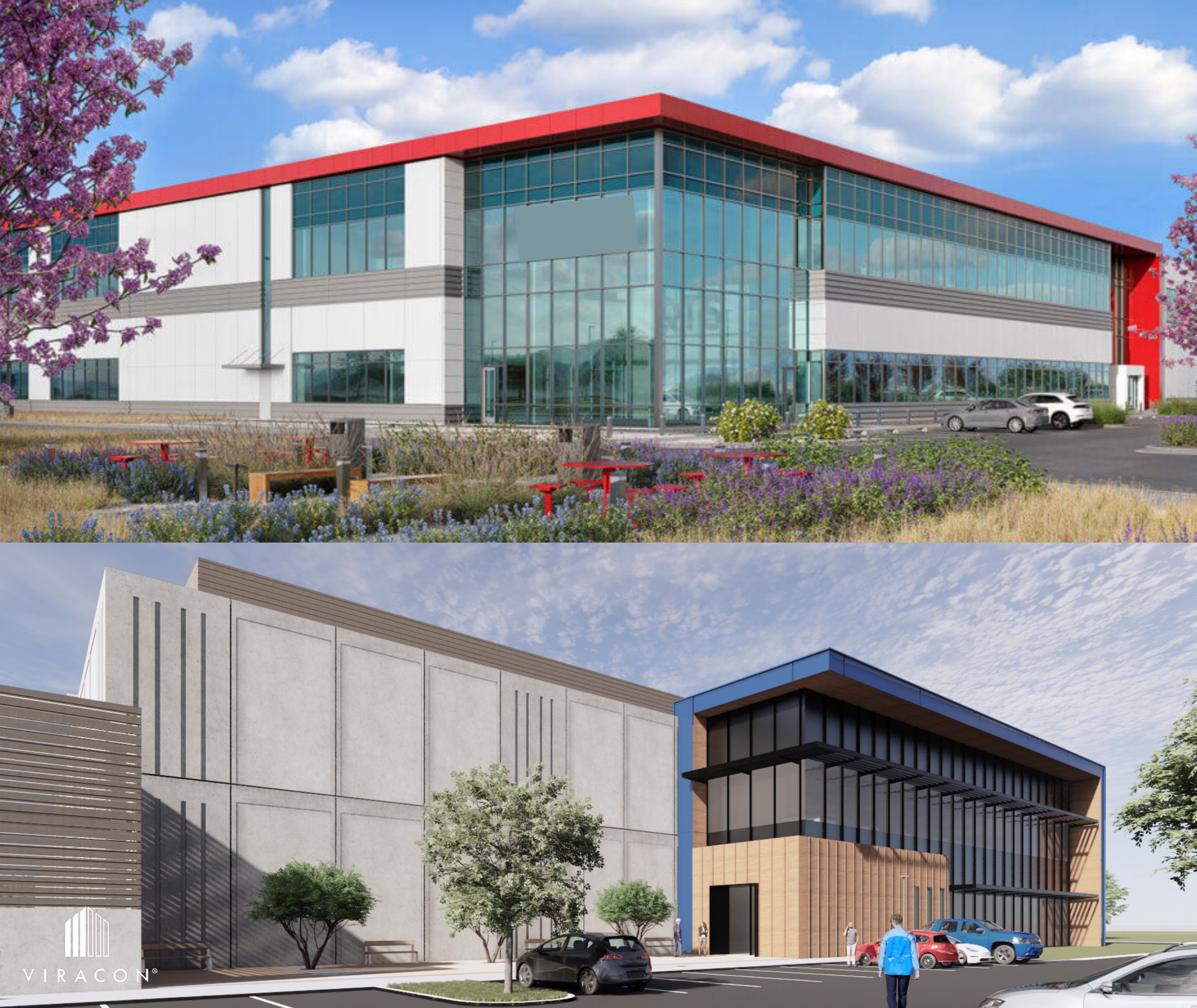
Balancing Energy Performance, Security, and Aesthetics in Data Center Glazing with Viracon Glass:
Exterior glass plays an important role in helping data centers manage energy efficiency without compromising facade design. Viracon's high-performance glass coatings are designed to enhance solar and thermal performance using Low-E coatings protected by hermetically sealed spaces filled with Argon. For sensitive environments in mission-critical facilities, additional technology such as high-STC acoustic laminates, forced-entry resistant glass, and anti-eavesdropping glass configurations can help support building confidentiality, occupant comfort, and project-specific security requirements.

Why Acoustic Performance Matters in Data Center Facade Design:
Viracon’s acoustic glass solutions, paired with acoustical window frames, allow architects and building owners to reduce noise transmission without compromising clarity or design aesthetics. Our laminated glass products can be paired with a variety of interlayers that help reduce noise transmission and create peaceful environments in even the busiest settings.
What is Sound Transmission Class (STC) ?
STC is a numerical rating that measures how well a material or building element—like glass—blocks sound. It's commonly used to evaluate acoustic performance in walls, windows, and doors. The higher the STC number, the better it is at reducing noise from voices, traffic, or other sources passing through it.
STC Rating Reference:
STC 25: Most speech is clearly audible through the barrier
STC 45: Privacy begins—normal speech is audible but not intelligible; raised voices may still be heard
STC 60+: Soundproofing performance begins—most speech and typical indoor noise are not audible
what is Outside-Inside Transmission Class (OITC) ?
OITC measures how well glass blocks external noise—especially low-frequency sounds like traffic, trains, and aircraft—from entering a building. OITC is specifically designed for evaluating the acoustic performance of exterior-facing elements like windows and curtain walls. Higher OITC ratings indicate better sound insulation from outdoor environments.
OITC Rating Reference:
OITC 25: Minimal noise reduction—low-frequency sounds like traffic and urban rumble are clearly audible
OITC 35: Moderate noise control—some reduction in street noise and low-frequency sounds
OITC 40+: High-performance noise control—significant reduction in outdoor noise; ideal for buildings near highways, airports, or urban centers.
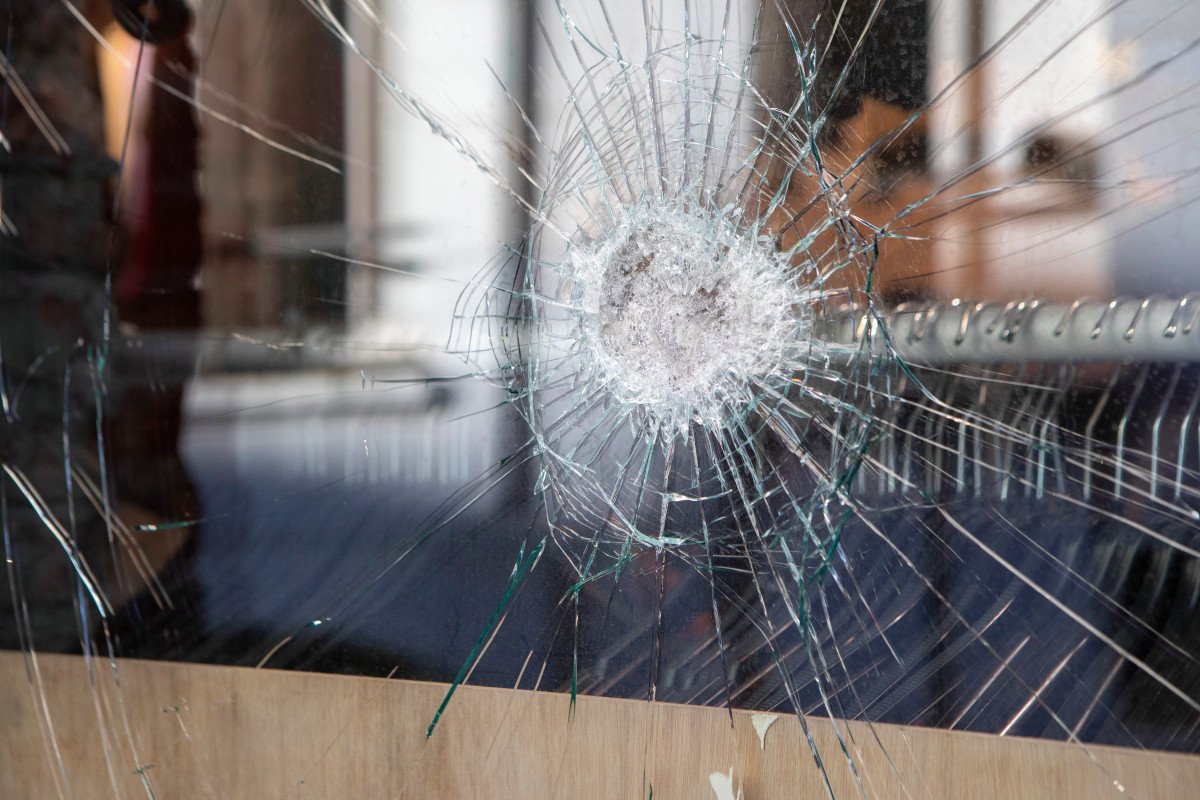
What glazing options are available for high-security areas?
Viracon offers a variety of laminated glass solutions that can protect occupants and buildings from threats such as; forced entry, vandalism, bomb blast, and anti-eavesdropping. Enhancing security protection with laminated glass facades also allows building designers and owners to achieve benefits of natural daylighting for occupants.
ASTM F3561
ASTM F3561 Standard Test Method for Forced-Entry Resistance of Fenestration Systems After Active Shooter Attack is the industry-preferred test method. This test method was developed to assess the forced-entry resistance of glass and glazing systems after simulating an active shooter attack. This test starts with ballistic weakening, followed by sequential forced-entry impacts utilizing a repeatable mechanical mechanism.
Laminated glass performance levels have been tested in accordance with ASTM F3561 Appendix X1 glass-only performance capability.
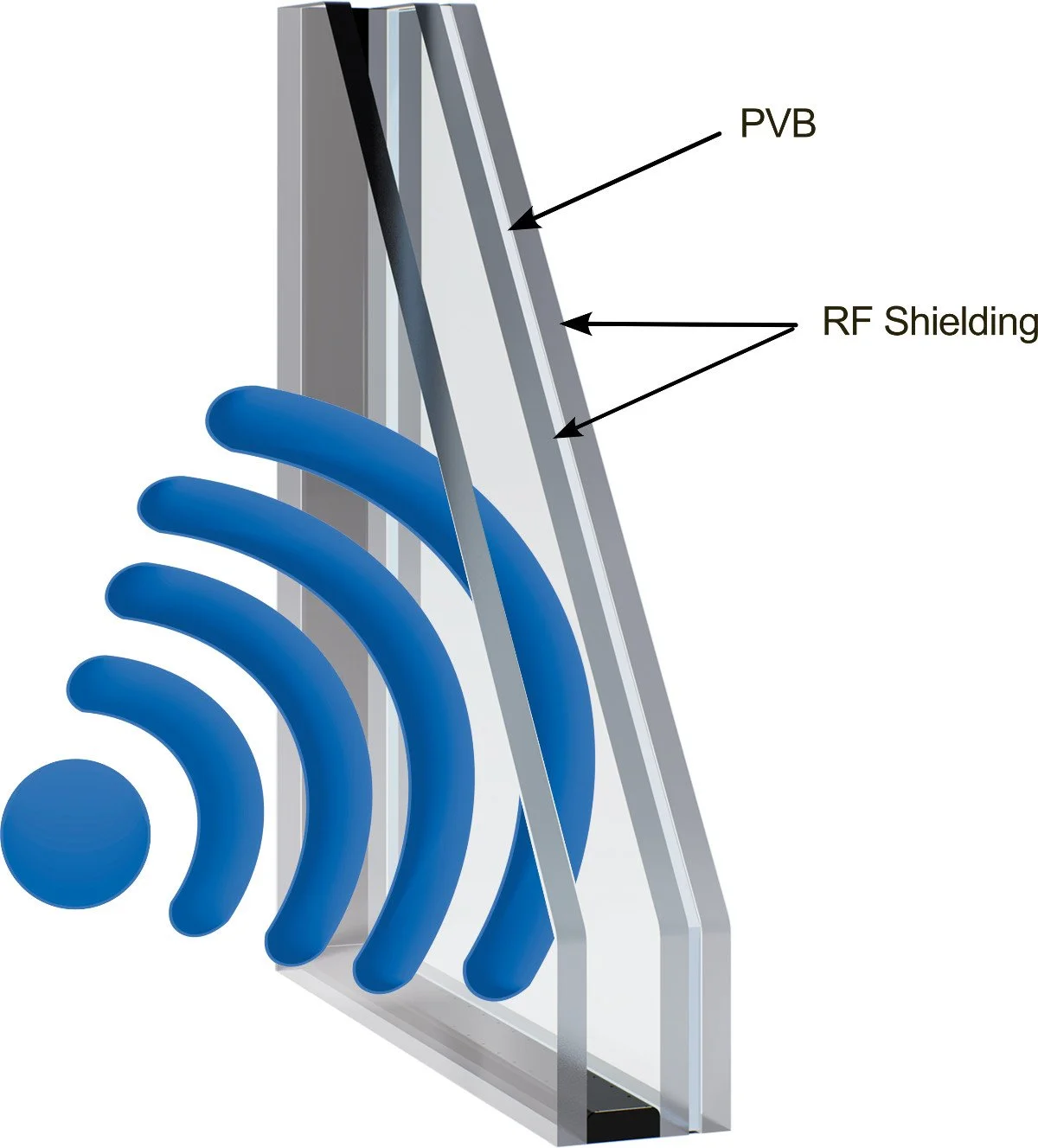
Mission Critical Facility Design: The Role of Anti-Eavesdropping Glass in Confidential Areas
With more data being transmitted and shared electronically, it is becoming necessary to protect private conversations, boardroom discussions and trade secrets from electronic eavesdropping.
CYBERSHIELD
This is especially true for government organizations, businesses, architects and building owners looking for ways to design secure buildings. For situations requiring this type of security, Viracon offers CyberShield® with Pilkington DATASTOP™ which is a laminated glass component that has been specifically engineered to attenuate the transmission of radio frequency (RF) electromagnetic radiation, also known as RF Shielding. CyberShield can be applied alone or as the inboard of an insulating, double laminated insulating, or triple insulating unit. It is visually undetectable, making it ideal to add EMF protection in sensitive areas such as conference rooms, consultation and HR offices, research labs – wherever privileged work is conducted.
