Viracon VNG-5024: A New Low-E Glass Coating for Texas Architecture
A Refined Neutral-Gray Appearance With High-Performance Solar Control
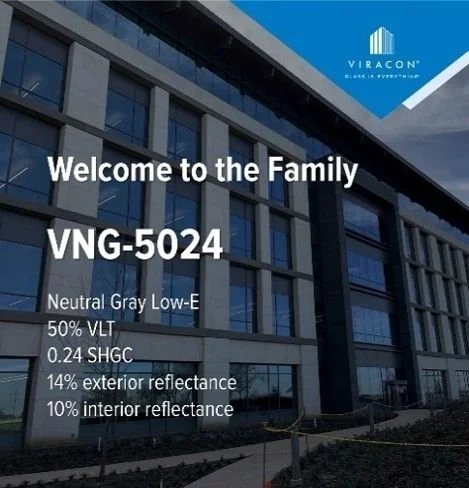
For Texas façades, architectural glass is both a design decision and a solar-load decision. Viracon’s new VNG-5024 triple-silver low-e coating gives architects a refined neutral-gray appearance while providing the solar-control performance needed for commercial, mixed-use, education, healthcare, and institutional buildings across the state.
VNG-5024 was developed in response to architect demand for high-performance glass with a neutral appearance and reduced exterior reflectance. Subtle slate undertones give the glass depth without introducing a strongly reflected color, while consistent appearance from different viewing angles helps create a more cohesive façade.
On a standard clear-glass insulating unit, VNG-5024 provides:
50% visible light transmittance
0.24 solar heat gain coefficient
14% exterior visible reflectance
10% interior visible reflectance
These values create a balanced glazing option for architects seeking natural daylight, exterior transparency, solar control, and a contemporary neutral-gray appearance. View Viracon’s VNG-5024 product information.
What Makes Viracon VNG-5024 Different?
VNG-5024 is the newest addition to Viracon’s Neutral Gray coating family. Unlike highly reflective glass that can dominate a building’s exterior expression, VNG-5024 provides a quieter visual character with low exterior reflectance and subtle slate undertones.
The coating is designed to offer:
A cool, neutral-gray exterior appearance
High-performance solar control
Low exterior and interior reflectance
Consistent color from multiple viewing angles
Natural views from the building interior
Compatibility with multiple glass substrates
Integration with silkscreen, digital printing, and bird-friendly options
Suitability for modern curtain wall and commercial glazing systems
VNG-5024 can be specified on clear, low-iron, mid-iron, gray, green, blue, and other available architectural glass substrates. Because the substrate influences transmitted and reflected color, architects should evaluate the complete glass makeup rather than selecting the coating independently.
Viracon recommends reviewing full-size glass samples under representative exterior and interior lighting conditions before making a final selection.
vng-5024 performance:
VNG-5024 SHGC
Solar Heat Gain Coefficient, or SHGC, describes how much incident solar energy enters a building through a glazing assembly as heat. This includes directly transmitted solar energy and absorbed energy that is subsequently released toward the interior.
SHGC is expressed as a number between zero and one. A lower number indicates that less solar heat passes through the glazing.
The published 0.24 SHGC for VNG1-5024 means that approximately 24% of the incident solar energy is transmitted through or released inward by the center-of-glass configuration under standardized rating conditions.
This does not mean that the entire installed curtain-wall assembly will have the same SHGC. Project performance can be influenced by:
Framing members
Spandrel and vision-glass proportions
Glass substrate and thickness
Insulating-glass configuration
Interior or exterior shading
Frit and printed patterns
Building orientation
Window-to-wall ratio
Adjacent construction
Project-specific environmental conditions
Architects and energy consultants should evaluate VNG-5024 as part of the complete fenestration and building-envelope assembly.
Why SHGC Is Important for Texas Buildings
Managing solar heat gain is a central consideration for commercial architecture throughout Texas. Extensive glazing can introduce significant solar energy into interior spaces, influencing cooling loads, equipment sizing, energy consumption, and conditions near the perimeter.
The impact can vary by façade orientation. East-facing glass receives lower-angle morning sun, west-facing glass is exposed to intense afternoon conditions, and south-facing façades experience different seasonal solar angles. North-facing glazing generally receives less direct solar exposure but still requires evaluation as part of the complete enclosure.
VNG-5024’s 0.24 SHGC gives Texas architects a high-performance solar-control option for projects seeking expansive glazing without overlooking solar loads. Its 50% VLT helps preserve useful daylight while the coating limits a greater proportion of solar heat.
Texas currently lists the 2015 IECC and ASHRAE 90.1-2013 as its statewide commercial energy-code baseline, but locally enforced requirements and project standards can vary. Design teams should confirm the adopted code, compliance path, climate zone, fenestration area, orientation, and project-specific performance criteria with the applicable jurisdiction. Review the U.S. Department of Energy’s Texas energy-code profile.
VNG-5024 VLT
Visible Light Transmittance, or VLT, measures the percentage of visible light that passes through the glass. Like SHGC, it is expressed as a number or percentage.
VNG1-5024 has a published 50% VLT, meaning that approximately half of the visible light reaching the center of the glass passes through the referenced insulating unit.
VLT affects:
Interior daylight levels
Views through the façade
Perceived transparency
Glare conditions
Exterior and interior appearance
Lighting-control strategies
The visual relationship between glass and adjacent materials
A higher VLT is not automatically better. Excessive visible light may contribute to glare, screen visibility concerns, localized brightness, and occupant discomfort. A lower VLT can reduce daylight and make the glass appear darker.
The appropriate value depends on façade orientation, glass area, building use, interior layout, shading, surrounding buildings, and daylighting goals. VNG-5024’s 50% VLT provides a middle-range option intended to bring daylight into the building while maintaining high-performance solar control.
Balancing VLT and SHGC for Texas Façades
VLT and SHGC should be reviewed together. VLT describes how much visible light enters the building, while SHGC describes how much solar heat enters through the glazing.
VNG1-5024 combines 50% VLT with a 0.24 SHGC. This relationship indicates that the glazing admits a comparatively useful level of visible light while limiting a greater proportion of solar heat.
For Texas architects, that balance may support:
Daylit offices and collaborative spaces
Transparent ground-floor façades
High-rise curtain-wall designs
Healthcare and institutional environments
Higher-education facilities
Mixed-use and hospitality projects
Public buildings and civic facilities
Daylighting, glare, energy performance, mechanical loads, and façade appearance should be evaluated through project-specific modeling and sample review.
the viracon difference
How Viracon Manufactures Coated Architectural Glass
A significant distinction in Viracon’s manufacturing process is when the low-e coating is applied.
Viracon heat treats the glass before applying its low-e coating. Applying the coating after heat treatment produces flatter glass with less distortion and improved visual clarity compared with processes in which the coated glass is subsequently heat treated.
This sequence is particularly important on large curtain-wall façades. Roller wave, bow, reflected-image distortion, coating color, glass flatness, viewing angle, and surrounding conditions can all influence the final appearance of architectural glazing.
By applying VNG-5024 after heat treatment, Viracon seeks to provide the visual consistency architects expect across large areas of insulating glass. VNG-5024 can only be used with heat-treated glass.
How a Viracon Insulating Glass Unit Is Constructed
An insulating glass unit, commonly called an IGU, consists of two or more glass plies separated by a sealed space. The cavity may include a spacer and insulating gas to support thermal performance.
Viracon’s published VNG1-5024 performance values are based on a one-inch insulating glass unit consisting of:
A 1/4-inch heat-treated clear-glass exterior ply
VNG-5024 applied to surface #2
A 1/2-inch argon-filled insulating space
A 1/4-inch clear-glass interior ply
The final project configuration may vary based on glass thickness, substrate, heat treatment, laminated components, spacer selection, coatings, printing, safety requirements, acoustical goals, structural loads, and applicable codes.
Where Does the Viracon Low-E Coating Go?
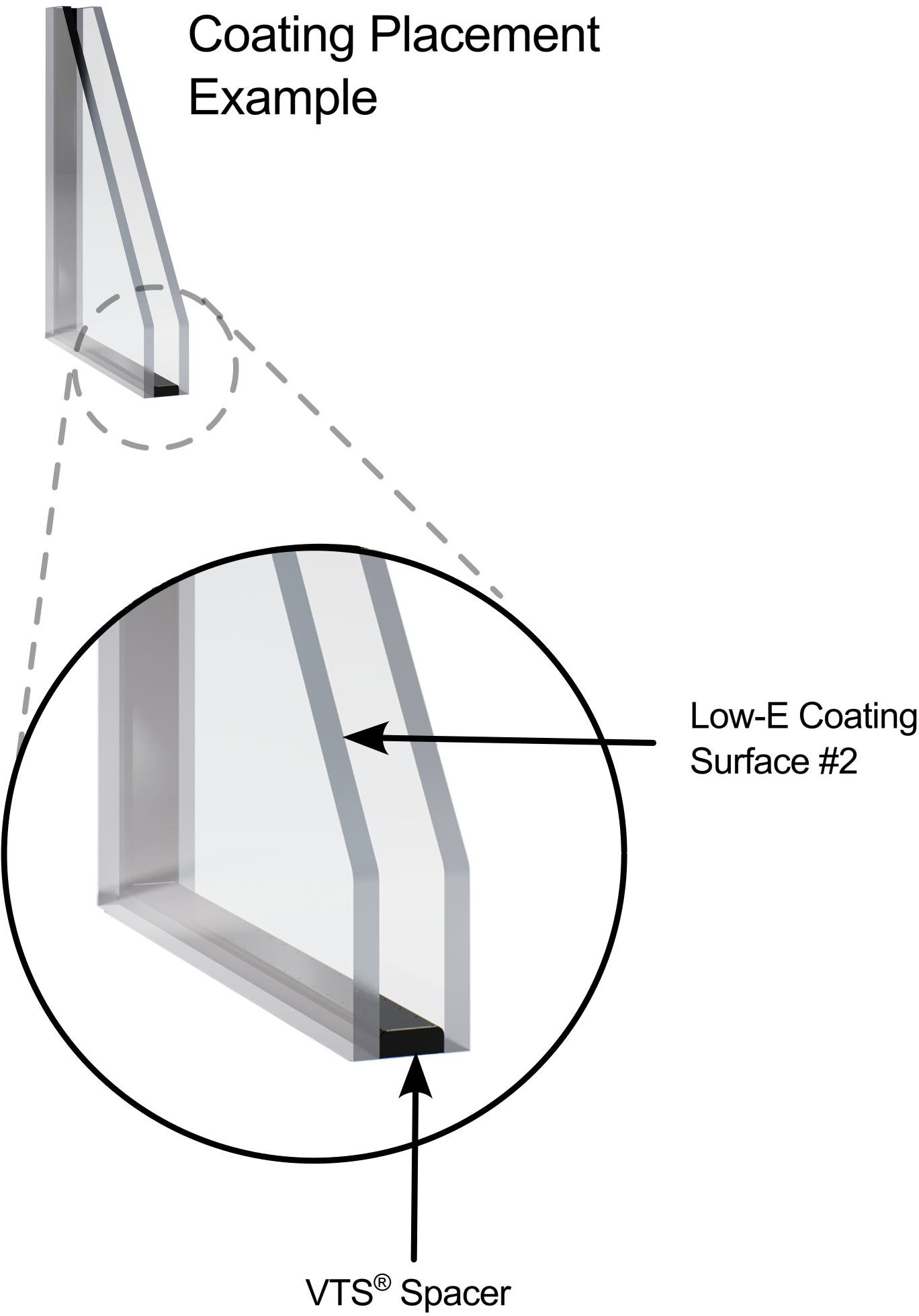
Architectural glass surfaces are numbered from the building exterior toward the interior. In a conventional two-ply insulating glass unit:
Surface #1 is the exterior face exposed to outdoor conditions.
Surface #2 is the interior face of the exterior glass ply.
Surface #3 is the cavity-facing side of the interior glass ply.
Surface #4 is the face exposed to the building interior.
For the published VNG-5024 insulating-glass configuration, the coating is applied to surface #2. This positions the low-e coating inside the sealed airspace, where it is protected from direct exposure, cleaning, contact, and weather.
Surface #2 placement also supports solar-control performance by addressing solar energy at the exterior side of the insulating unit before more of that energy moves into the building. The final coating location should always be coordinated with the selected glass configuration and confirmed through Viracon.

FAQ’s
Frequently Asked Questions About Viracon VNG-5024
What is Viracon VNG-5024?
VNG-5024 is a high-performance triple-silver low-e coating in Viracon’s Neutral Gray coating family. It features a neutral-gray appearance, subtle slate undertones, low exterior reflectance, and high-performance solar control.
What are the published performance values for VNG-5024?
On Viracon’s standard one-inch VNG1-5024 insulating-glass configuration, the coating provides 50% visible light transmittance, 14% exterior visible reflectance, 10% interior visible reflectance, and a 0.24 SHGC.
These are nominal center-of-glass values. Project-specific performance depends on the complete glass and framing assembly.
Where is the VNG-5024 coating located in an IGU?
In a conventional two-ply insulating glass unit, VNG-5024 is applied to surface #2—the cavity-facing side of the exterior glass ply. The coating is protected within the sealed insulating space.
What does a 0.24 SHGC mean?
A 0.24 SHGC means that approximately 24% of incident solar energy enters through or is released inward by the referenced center-of-glass configuration under standardized conditions. Lower SHGC values generally indicate greater solar-heat control.
What does 50% VLT mean?
A 50% VLT means that approximately half of the visible light reaching the referenced center-of-glass configuration passes through it. VLT affects daylight, transparency, glare, views, and the perceived appearance of the façade.
Why does Viracon apply its coating after heat treatment?
Viracon applies low-e coatings after heat treatment resulting in flatter glass with less distortion and improved visual clarity. This can be particularly important on large curtain-wall façades where reflected-image quality and visual consistency are design priorities.
Can VNG-5024 be combined with printed or bird-friendly glass?
Yes. VNG-5024 can be combined on the same surface with silkscreen patterns or DigitalDistinctions printing. VNG products may also be available with surface #1 SoarSafe laser-etch options. Final combinations should be confirmed with PGP/Viracon representative.
Is VNG-5024 appropriate for Texas buildings?
VNG-5024’s 0.24 SHGC, 50% VLT, and low exterior reflectance make it a strong option for consideration on Texas commercial, mixed-use, education, healthcare, and institutional projects. Final selection should be based on project-specific code, energy, daylighting, aesthetic, and envelope requirements.
Evaluate VNG-5024 for Your Next Texas Project
Planning a curtain-wall, storefront, or architectural-glass project in Texas? PGP works with architects, building-envelope consultants, developers, general contractors, and glazing professionals to support glass selection from early design through construction.
Our team can assist with VNG-5024 samples, full-size glass viewing, performance comparisons, substrate selection, specifications, glass makeups, coating placement, printing options, spandrel coordination, and project-specific product education.