GE Elemax Air and Water Barrier Systems for K–12 Schools and Higher-Education Facilities
Supporting Continuous, High-Performance Building Envelopes Across Texas Education Projects
Momentive Silicones for Building solutions give architects versatile options for protecting K–12 schools, colleges, universities, and other education facilities. Air and water-resistive barrier coatings, weatherseal sealants, architectural coatings, and roof coatings can contribute to a coordinated building-envelope strategy designed to manage rain, air intrusion, ultraviolet exposure, temperature extremes, and movement between adjoining materials.
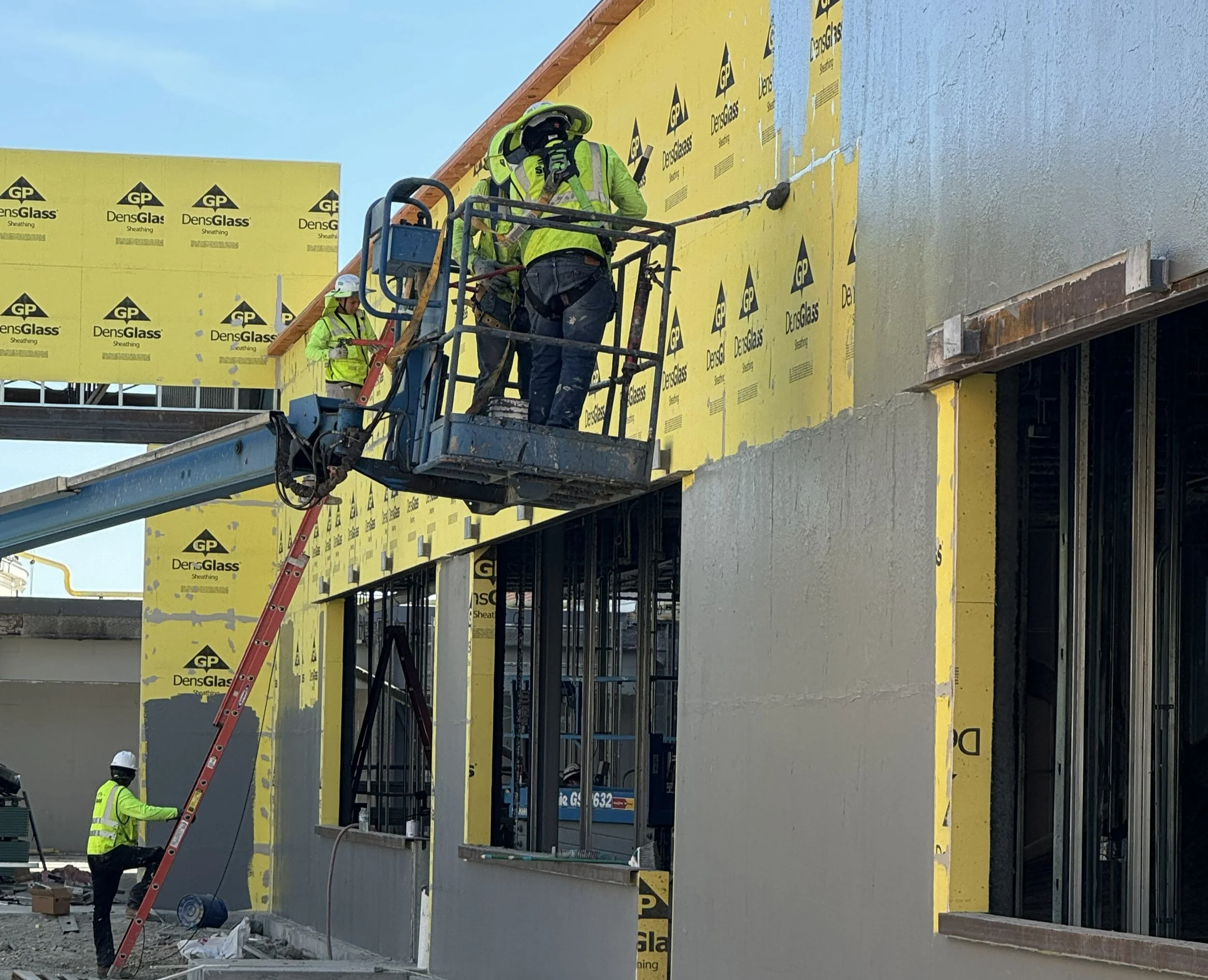
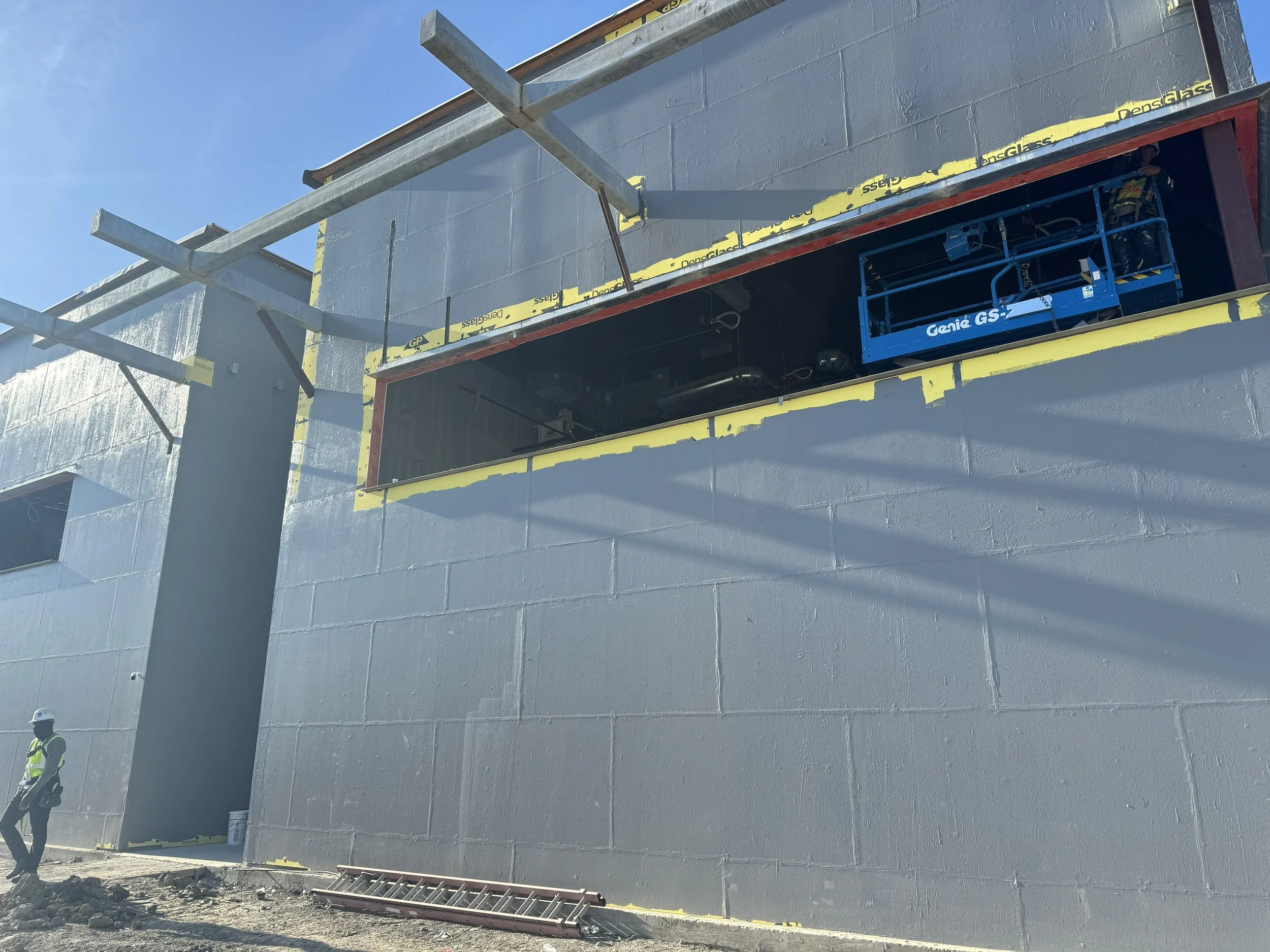
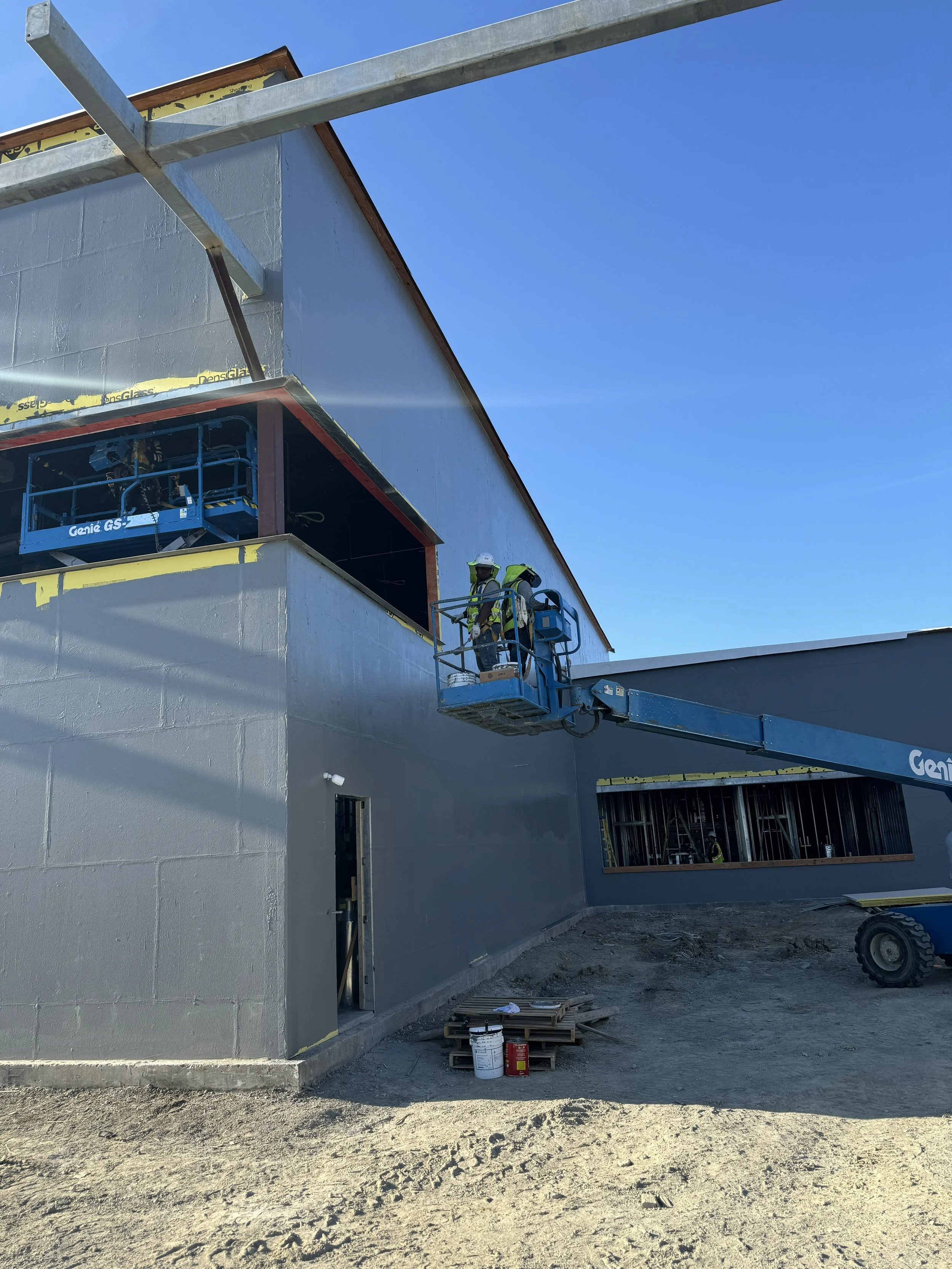
At the exterior wall, the GE Elemax™ Air and Water-Resistive Barrier System provides a seamless, flexible membrane that helps control air and water movement through the building envelope. Elemax can be incorporated into new education facilities and evaluated for renovation projects where continuity, substrate compatibility, installation sequencing, and long-term performance are priorities.
Why Air and Water Barrier Continuity Matters in Education Design
Education facilities combine varied wall assemblies, large areas of glazing, high-traffic entrances, roof transitions, mechanical penetrations, and multiple changes in material. Each transition creates a condition where the air and water control layers must remain continuous.
Discontinuities around windows, curtain wall, entrances, wall penetrations, parapets, foundations, and transitions between cladding systems can affect the performance of the complete enclosure. These details may allow uncontrolled air movement or water intrusion when they are not properly designed, coordinated, and installed.
For architects and building-envelope consultants, air and water barrier design should extend beyond the field of the wall. The enclosure must be evaluated as an interconnected assembly that includes:
Exterior sheathing and wall substrates
Window, storefront, and curtain-wall openings
Doors and high-traffic entrances
Roof-to-wall and parapet transitions
Mechanical and electrical penetrations
Changes between masonry, metal panels, glazing, and other cladding materials
Expansion joints and locations requiring movement accommodation
Below-grade, foundation, and plaza transitions
Early coordination helps clarify how the control layers connect before product selections, details, and construction sequencing are finalized.
How the GE Elemax Air and Water Barrier System Works
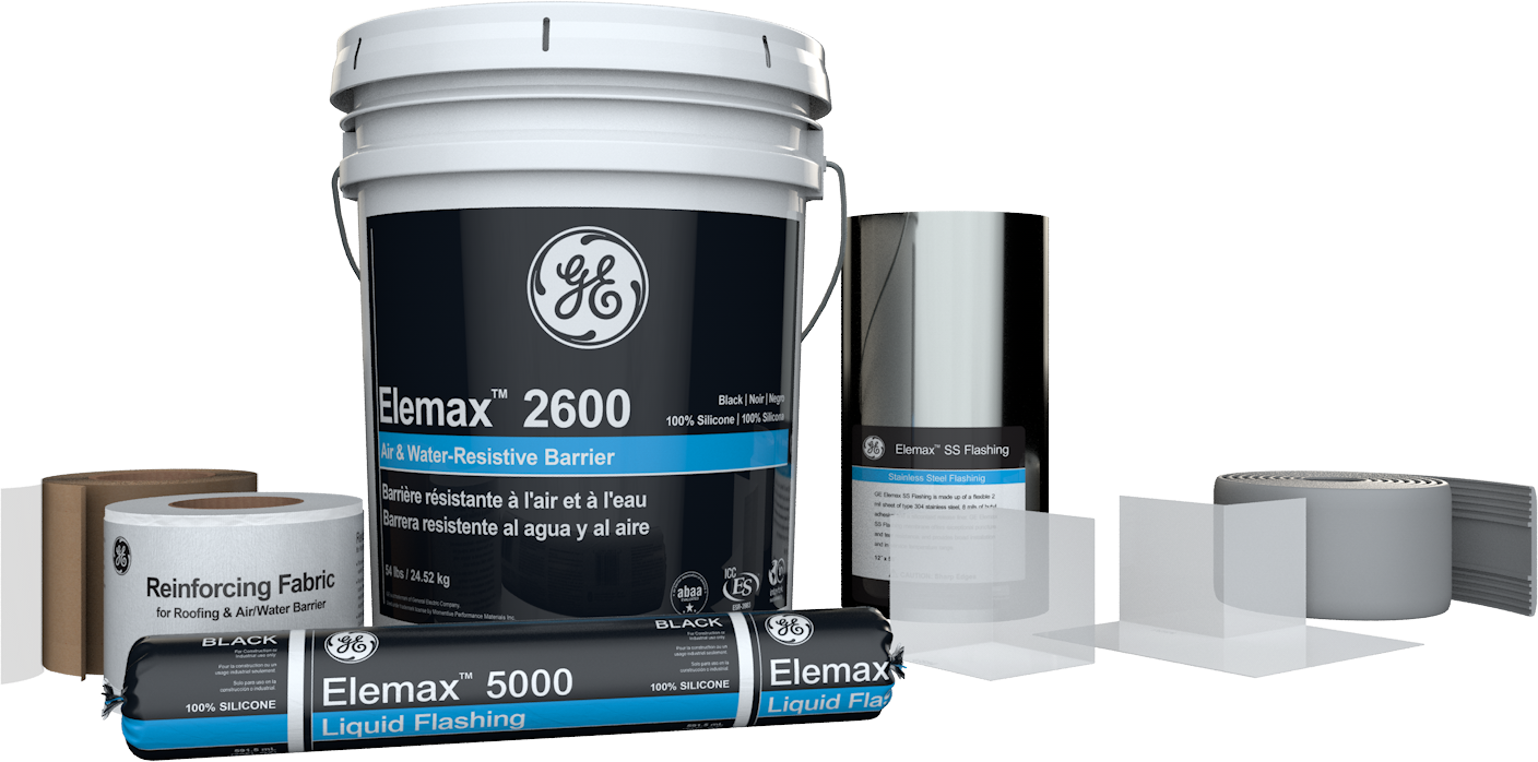
GE Elemax Air and Water-Resistive Barrier Coatings form a seamless membrane that helps control the movement of air and water through the exterior enclosure. The system is designed around Elemax 2600 Air and Water-Resistive Barrier Coating and complementary products used to address openings, transitions, joints, and other critical conditions.
System components may include:
Elemax™ 2600 Air and Water-Resistive Barrier Coating: A silicone coating used across approved exterior wall substrates to create the primary air and water control layer.
Elemax™ 5000 Liquid Flashing: A liquid-applied flashing product for critical transitions and detailing around openings.
Elemax™ SS Flashing: A flashing material designed to help prevent air and water penetration at joints, cavities, and transitions.
RF100 Reinforcing Fabric: A high-tensile reinforcing material for designated critical areas.
UltraSpan™ Silicone Accessories: Components used to support continuity at movement joints and other project-specific conditions.
The appropriate combination of products depends on the wall assembly, substrate, opening configuration, cladding design, exposure, detailing requirements, and manufacturer recommendations.
design advantages
Design Advantages for New K–12 Schools and University Buildings
A Seamless Air and Water Control Layer
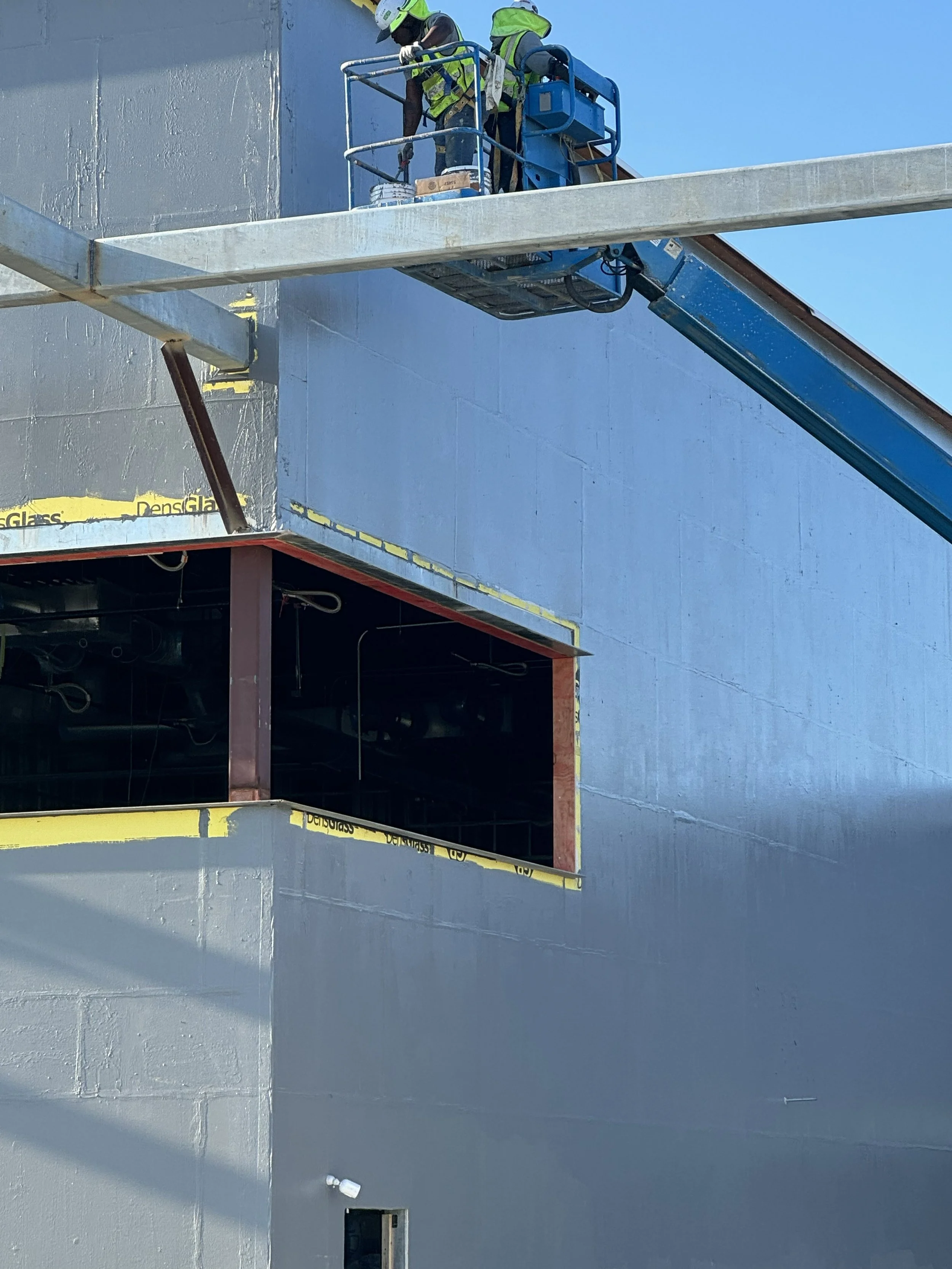
Liquid-applied systems can conform to changes in plane, irregular geometries, penetrations, and transitions that may be difficult to address with rigid or sheet materials. Once applied at the required thickness, Elemax 2600 creates a continuous membrane across approved substrates.
This can be valuable on education buildings with complex façades, multiple cladding materials, extensive glazing, projecting architectural features, and frequent wall penetrations.
Flexibility at Moving Building Components
Schools and university buildings contain transitions between materials with different rates of movement. Concrete, masonry, steel framing, aluminum glazing systems, sheathing, sealants, and metal panels respond differently to temperature, moisture, loading, and building movement.
Silicone maintains flexibility after curing, allowing the specified system to accommodate movement at properly designed and detailed conditions. Movement capability should be evaluated as part of the complete assembly rather than assumed from the field coating alone.
Compatibility With Open-Joint Rainscreen Systems
Open-joint rainscreen façades intentionally expose portions of the underlying wall assembly to daylight and weather. The air and water barrier may therefore require resistance to ultraviolet exposure and environmental conditions during construction and after the cladding is installed.
Momentive identifies Elemax AWB as a candidate for most open-joint rainscreen systems because of its lasting flexibility and resistance to degradation from the elements. Final suitability should be confirmed for the project’s joint dimensions, cladding configuration, exposure, substrate, and complete wall design.
Support for Energy-Efficient School Design
Uncontrolled air leakage can influence heating and cooling loads, temperature stability, moisture movement, and the performance of the thermal enclosure. A properly designed and installed air barrier helps the complete wall assembly perform closer to its intended design.
The air barrier should be coordinated with continuous insulation, glazing systems, roof assemblies, mechanical design, and the project’s energy-performance goals. No single product creates an energy-efficient building by itself; performance depends on the continuity and interaction of the complete enclosure.
Rain-Ready Performance and Year-Round Installation
Education construction schedules are often tied to fixed opening dates, academic calendars, bond-program commitments, and phased campus work. Weather delays or limited installation windows can affect several downstream trades.
According to Momentive’s published education case study, Elemax 2600 is rain ready in approximately 30 minutes and can be applied at temperatures as low as 0°F. The manufacturer also describes the product as primerless and capable of single-coat application for approved conditions. These characteristics may help project teams manage weather exposure and simplify portions of the installation sequence. Read Momentive’s education case study.
Application requirements still depend on substrate condition, surface preparation, ambient conditions, wet-film thickness, detailing, equipment, and the current manufacturer instructions. Project specifications should clearly establish installation and quality-control requirements.
Coordinating Elemax at Openings, Transitions, and Penetrations
The field of the wall is only one part of an effective air and water barrier system. The most demanding conditions often occur where the membrane connects to windows, curtain wall, storefront, entrances, roof systems, foundations, penetrations, and adjacent materials.
Architects and building-envelope consultants should identify these transitions in the drawings and specifications. Important coordination topics include:
The location of the primary air-control plane
Continuity between the wall membrane and fenestration systems
Compatibility between liquid flashing, membranes, sealants, gaskets, and adjacent materials
Minimum and maximum joint dimensions
Changes in substrate and plane
Fasteners, clips, girts, and cladding attachments
Mechanical, electrical, plumbing, and structural penetrations
Parapets, copings, roof edges, and roof-to-wall transitions
Foundation and below-grade connections
Sequencing between wall, roofing, glazing, sealant, and cladding contractors
Project teams should avoid relying solely on generalized details. Conditions should reflect the actual wall assemblies, products, interfaces, and construction sequence used on the facility.
Field Quality Control for Education Building Envelopes
A high-performance specification must be supported by a practical quality-control plan. Before application begins, the contractor should verify substrates, moisture conditions, surface cleanliness, compatibility, accessory products, transitions, and environmental requirements.
Recommended project procedures may include:
A preinstallation conference involving the architect, envelope consultant, general contractor, installer, and manufacturer representative
Review of approved product data and shop drawings
Field-adhesion testing on representative substrates
Verification of required wet- and dry-film thickness
Mockups of typical wall areas, openings, transitions, and penetrations
Documentation of repairs, touchups, and areas concealed by subsequent construction
Coordination of inspections before insulation or cladding installation
Manufacturer review or field support when included in the project requirements
Because Elemax 2600 is applied as a continuous coating, installers can visually review the membrane for gaps, damage, incomplete coverage, and inconsistent thickness. Required testing, inspection frequency, and acceptance criteria should be established in the construction documents.
ge elemax for education renovations
GE Elemax for School Renovations and Campus Modernization
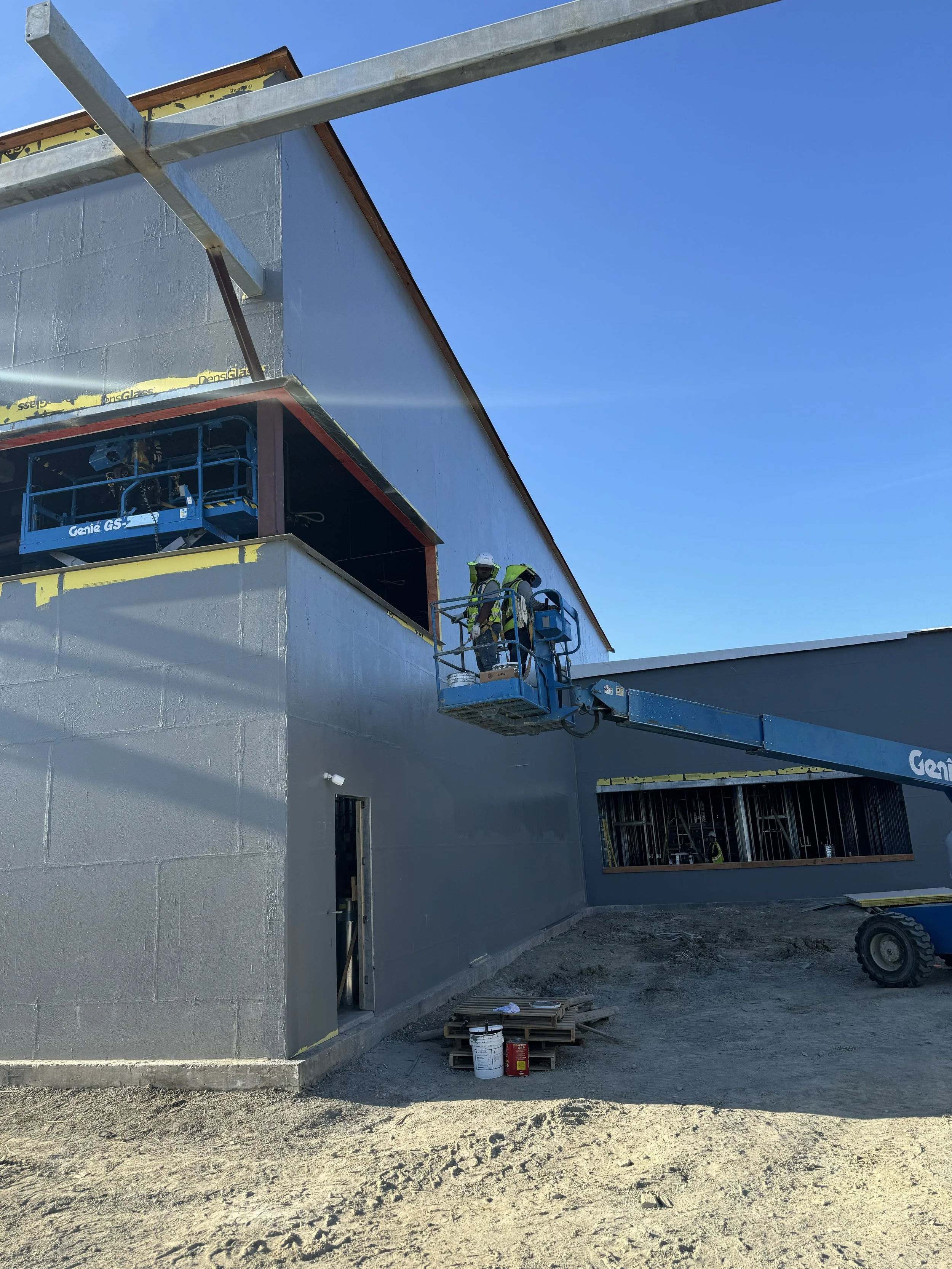
Existing K–12 schools and higher-education campuses may require enclosure improvements as part of façade replacement, recladding, window replacement, additions, or broader campus modernization programs.
A liquid-applied air and water barrier can be considered where the existing construction presents irregular substrates, transitions between old and new assemblies, or conditions that are difficult to address with rigid materials. However, renovation work requires careful investigation before the system is specified.
The project team should evaluate:
Existing wall composition and concealed conditions
Substrate stability and surface preparation
Existing coatings, membranes, sealants, and adhesives
Moisture within the wall assembly
Adhesion and compatibility with remaining materials
Connections between existing and new control layers
Removal or treatment of deteriorated materials
Hazardous-material requirements
Phasing around occupied classrooms and campus operations
Temporary weather protection during construction
Field adhesion testing and representative mockups are especially important for renovation projects because existing substrates may vary considerably across the building. Final product selection and preparation requirements should be confirmed with Momentive based on documented field conditions.
Air and Water Barrier Design for Texas Education Facilities
K–12 schools and higher-education facilities throughout Texas must respond to intense solar exposure, high temperatures, wind-driven rain, humidity, storms, and significant seasonal weather changes. The balance of these conditions varies across Dallas, Fort Worth, Austin, Houston, San Antonio, El Paso, and surrounding communities.
Houston-area education facilities require careful attention to humidity, moisture control, and wind-driven rain. Dallas–Fort Worth projects may experience high heat, severe storms, wind, and rapid temperature changes. Austin and San Antonio schools face extended cooling seasons and strong solar exposure. El Paso facilities must respond to intense ultraviolet exposure, dry conditions, and broad temperature swings.
A project-specific enclosure strategy should consider climate, orientation, wall type, glazing area, cladding configuration, energy-code requirements, construction sequencing, and long-term maintenance. Elemax system components should be selected and detailed according to the actual conditions of each Texas education project.
FAQ’s
Frequently Asked Questions About GE Elemax for Education Facilities
What is GE Elemax used for on a school building?
GE Elemax is used to create a continuous air and water-resistive barrier within the exterior wall assembly. It may be applied across approved substrates and detailed at openings, transitions, joints, and penetrations using compatible system components.
Can Elemax be used on both K–12 schools and higher-education facilities?
Yes. Elemax can be evaluated for elementary schools, middle schools, high schools, colleges, universities, libraries, laboratories, athletic facilities, performing-arts buildings, student centers, residence halls, and other education-related buildings.
The selected system must be appropriate for the project’s substrates, wall assemblies, exposure, detailing, and performance requirements.
Is Elemax appropriate for new construction and renovations?
Elemax may be considered for both new construction and renovation projects. New construction allows the air and water barrier to be coordinated across the enclosure from the beginning of design. Renovations require additional investigation, testing, preparation, and detailing to connect new materials with existing assemblies.
How quickly is Elemax 2600 rain ready?
Momentive reports that Elemax 2600 can be rain ready in approximately 30 minutes. Actual application and exposure requirements should be confirmed using current product data, weather conditions, substrate conditions, and manufacturer instructions.
Can Elemax be installed during cold weather?
Momentive reports that Elemax 2600 can be applied at temperatures as low as 0°F. Substrate condition, frost, ice, moisture, ambient conditions, product storage, and installation procedures must still meet current manufacturer requirements.
Can Elemax be used behind an open-joint rainscreen?
Momentive identifies Elemax AWB as a candidate for most open-joint rainscreen systems because of its flexibility and resistance to environmental exposure. Suitability should be verified for the project’s joint width, exposure, cladding geometry, substrate, and complete wall assembly.
Does Elemax require a primer?
Momentive describes Elemax 2600 as primerless for approved applications. Because substrates and field conditions vary, adhesion testing and confirmation of current manufacturer requirements are recommended before installation.
When should architects involve the air-barrier manufacturer?
Manufacturer coordination should begin during design development, before wall assemblies and transition details are finalized. Early involvement can help the team evaluate substrates, accessory products, compatibility, application requirements, specifications, mockups, testing, and field quality control.
plan your next project with
GE Elemax
Plan the Air and Water Barrier for Your Next Texas Education Project
Planning a new K–12 school, university building, campus addition, or education-facility renovation in Texas? PGP works with architects, building-envelope consultants, general contractors, and installers to support early product evaluation and construction coordination.
Our team can assist with GE Elemax system selection, project details, specification support, samples, compatibility discussions, application requirements, preinstallation planning, and connections to Momentive’s technical resources.
Contact PGP to discuss GE Elemax air and water barrier solutions for an education project in Dallas, Fort Worth, Austin, Houston, San Antonio, El Paso, or elsewhere in Texas.